지능형 매트리스 기계
150개국 이상 수출
Date:
Historically, a conventional bed setup consists of two separate parts: a bed frame (or foundation) and a mattress. The bed frame handles structural support—lifting, stabilizing, bearing loads—while the mattress provides comfort, contouring, and sleeping surface. For mattress brands and furniture makers, this means two product lines, two sets of materials, and double the logistics and complexity.
In recent years, a design shift toward floor mattresses or low-profile beds (placing the mattress directly on or very close to the ground) has gained traction in interior design circles and among minimalism enthusiasts:
However, placing a mattress directly on the floor isn't without drawbacks. Issues like poor airflow, increased exposure to dust/bugs, and reduced durability are common complaints. Designers often respond by using slatted low platforms, tatami-style bases, or integrating low-profile frames.
From a consumer or interior design viewpoint, the trend toward low or floor beds makes sense: less clutter, more flexibility, and a more intimate connection with space. But from a manufacturing vantage point, the separation of frame and mattress has long been taken as a given—but it doesn’t have to be.
Imagine if the mattress core and bed frame functions were synthesized—creating a single “core product” that serves both structural support and cushioning. That’s exactly what Lianrou’s pocket spring bed frame does: a 57 cm tall, bagged spring core that can be placed on the floor and performs as both the frame and the mattress core. In effect, it’s a revolutionary, integrated bed component that bridges consumer design trends, interior aesthetics, and manufacturing efficiency.
Unlike traditional mattresses that require a separate bed base made of wood or steel, the Pocket Spring Bed Frame is a fully integrated structure. Each spring is carefully encased in a fabric pocket, and after bagging, the entire unit reaches a height of about 57 cm — tall enough to be placed directly on the floor.
This means the product itself acts as both a bed frame and a mattress core, eliminating the need for a separate base or additional frame structure. For mattress factories and e-commerce brands, this innovation represents a major leap forward in both manufacturing efficiency and cost reduction.
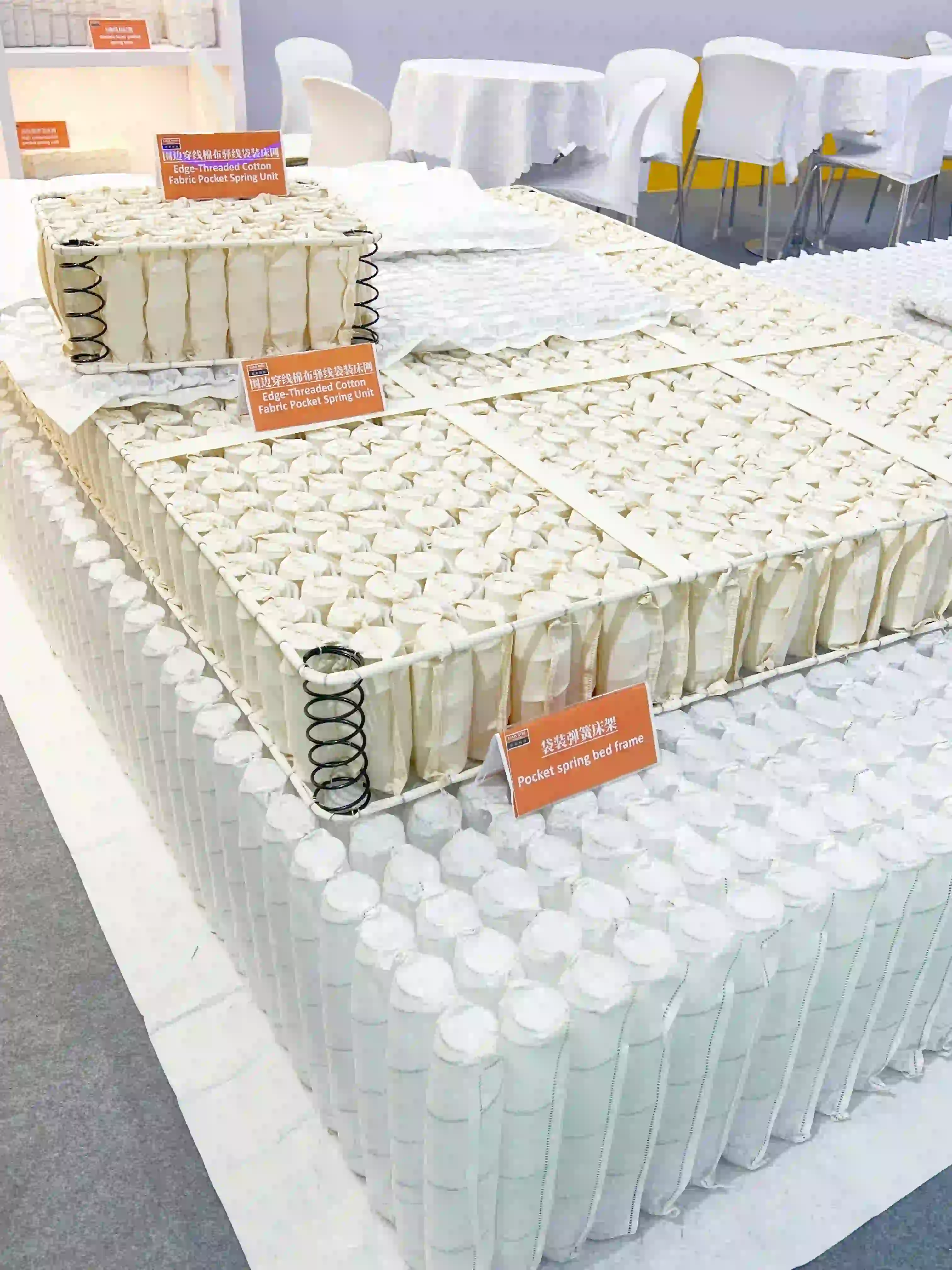
Lianrou Machinery is known for leading the evolution of mattress machinery through advanced automation, precise engineering, and continuous innovation. The Pocket Spring Bed Frame is the result of deep research into global bedding trends and user comfort needs.
By optimizing the structure and height of each spring, Lianrou created a bed frame that provides:
This integrated structure not only enhances comfort but also delivers significant value to manufacturers and retailers worldwide.
The most distinctive feature of Lianrou’s pocket spring bed frame is its integration of two core components — the bed frame and the mattress core. This combination creates a semi-finished product that can drastically simplify the production process.
Manufacturers only need to add external fabrics such as foam, latex, or bedding covers to turn it into a ready-to-sell mattress. The result is faster production, fewer assembly steps, and lower manufacturing costs.
With a post-bagging height of approximately 57 cm, the spring system provides an ideal balance of support and softness. Each spring unit is designed to adapt to the human body’s natural curve, maintaining perfect alignment and minimizing pressure points.
The high resilience ensures excellent durability, stability, and comfort, suitable for both home and hospitality markets.
The pocket spring bed frame is compatible with compression and roll-packing technologies, making it easy to store and ship in compact packages. This innovation reduces storage volume, freight costs, and carbon footprint, making it ideal for online mattress brands and global furniture exporters.
Platforms such as Amazon, Wayfair, and Walmart Marketplace benefit greatly from these advantages — allowing them to offer customers faster shipping and more affordable prices without compromising quality.
Traditional bed frames require expensive materials such as wood, steel, and complex assembly hardware. By eliminating these components, Lianrou’s pocket spring bed frame provides a direct and efficient way to reduce production costs.
This innovation allows mattress factories and retailers to:
It is truly an integrated cost-reduction and efficiency-enhancing solution for modern bedding manufacturers.
The bed frame is lightweight, modular, and user-friendly, allowing for quick installation and easy maintenance. It’s particularly suitable for DIY furniture markets and e-commerce brands that focus on direct-to-consumer (DTC) models.
Users can effortlessly assemble or reposition it without tools — providing the same convenience as popular "mattress-in-a-box" products.
Each Lianrou pocket spring bed frame is built using premium steel wire and high-quality pocket fabric, ensuring long-term performance and consistent comfort. The structure remains stable even after years of use, maintaining its elasticity and shape.
This durability not only extends the product lifespan but also reduces warranty claims and customer returns, improving overall brand reputation and trust.
While fully integrated spring-frame hybrids are still novel, some existing mattress and bedding brands experiment with low-profile or floor-usable designs:
Solid wood frames are among the more expensive frame options. According to industry sources, a quality wooden bed frame might cost around USD 200, with premium hardwood models easily exceeding USD 1,000.
Advantages
Drawbacks
Cost Estimates
A typical metal frame often ranges between USD 100 – USD 400 depending on design, size, and finish.
By replacing the separate frame + mattress core with a unified spring-core unit, cost savings are realized via:
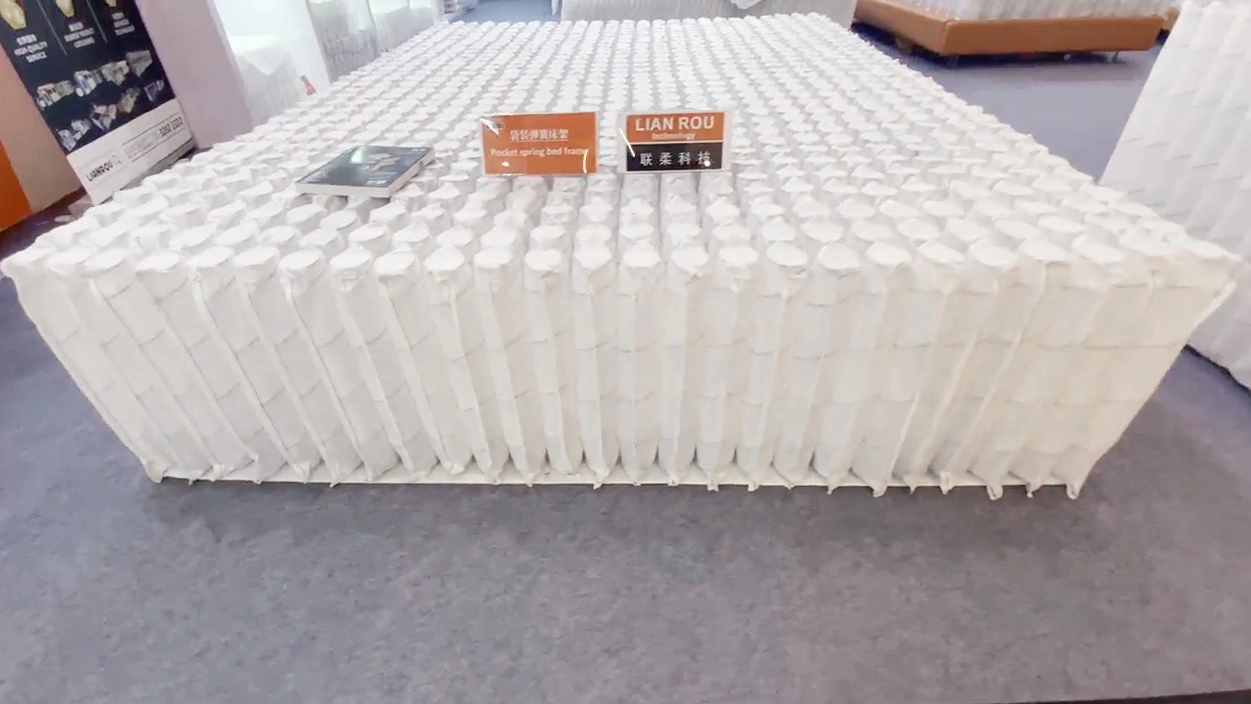
A conservative estimate (depending on market, scale, material choice, and region) might suggest USD 100–USD 400 saved per unit when substituting a traditional frame + mattress with an integrated spring frame core. (This aligns with mid-tier frame costs plus shipping overheads.)
Of course, real savings will depend on region-specific material costs, labor, shipping, and economies of scale — but even with conservative margins, the integrated approach can shift profit structures significantly.
In today’s competitive furniture market, brands need to balance innovation, cost-efficiency, and user experience. Lianrou’s Pocket Spring Bed Frame achieves all three.
By combining automation, engineering expertise, and comfort-driven design, it empowers mattress manufacturers to modernize production and scale their business efficiently. For Amazon sellers, online mattress brands, and furniture startups, this innovation provides a new opportunity to stand out with a unique product that combines convenience and performance.


TOP
