Intelligente Matratzenmaschinen
Export in über 150 Länder
Date:
The global mattress industry is experiencing a major transformation driven by changing consumer sleep preferences, rising demand for customized comfort, sustainable materials, compressed shipping solutions, and automated manufacturing technologies. For mattress manufacturers, sofa manufacturers, furniture producers, and bedding brands, understanding global mattressing trends is no longer only about choosing materials — it is about selecting the right mattress structure, production technology, and manufacturing equipment to compete in international markets.
Currently, the global mattress market includes several major categories such as innerspring mattresses, pocket spring mattresses, memory foam mattresses, latex mattresses, hybrid mattresses, and smart mattresses. Among them, pocket spring mattresses have become one of the fastest-growing segments because they provide independent support, better motion isolation, improved ergonomics, and flexible customization options such as zoning pocket spring units. In North America and Western Europe, hybrid mattresses combining pocket springs with foam or latex are becoming increasingly popular. In emerging markets such as Southeast Asia, India, Africa, and South America, affordable spring mattresses and compressed mattresses are experiencing strong growth due to expanding middle-class populations and the rapid development of e-commerce.
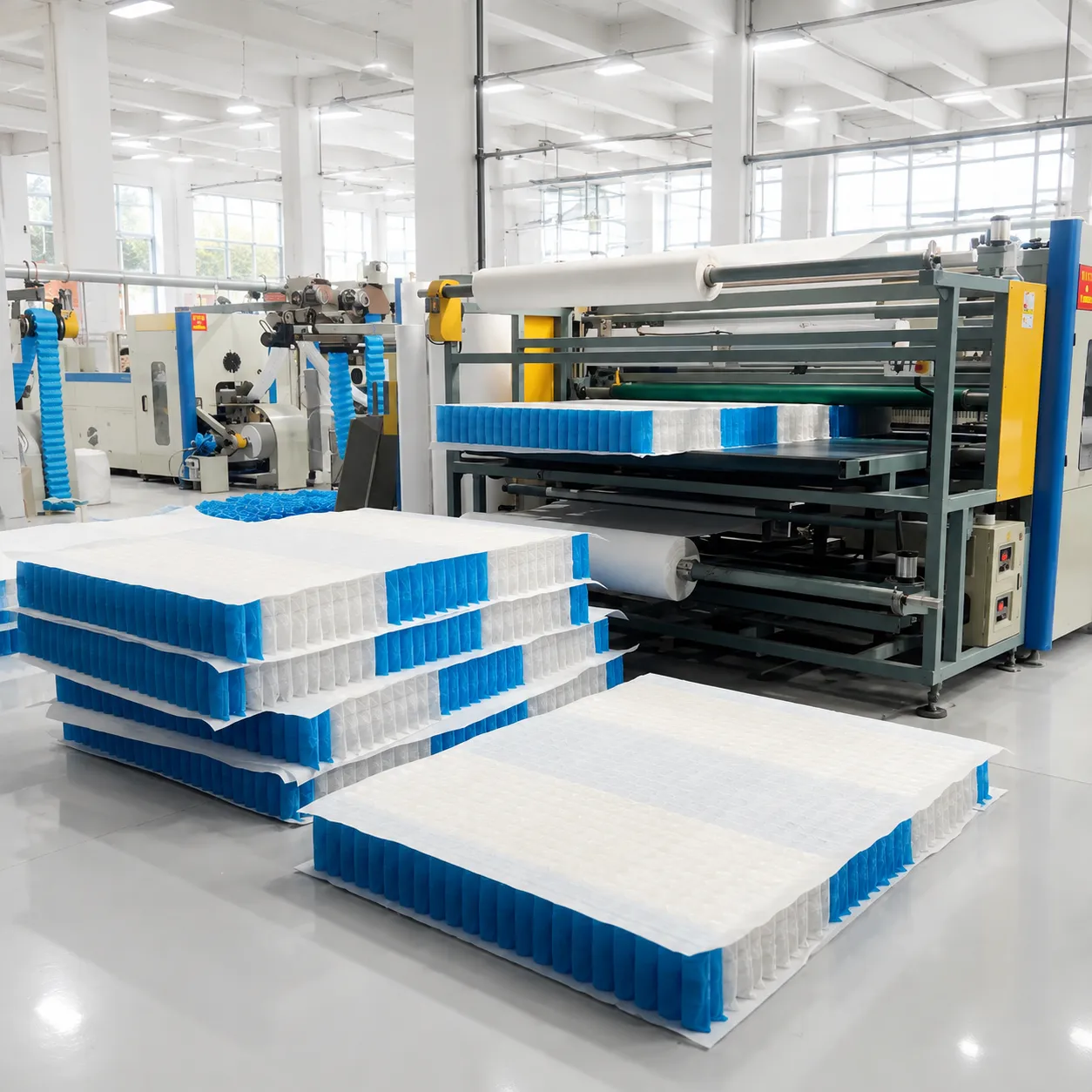
From a manufacturing perspective, mattress factories are facing several challenges: increasing labor costs, higher export logistics expenses, stricter environmental regulations, and consumers’ demand for personalized comfort. Therefore, many manufacturers are investing in advanced equipment, including pocket spring machines, automatic mattress production lines, and mattress roll packing machines, to improve efficiency, reduce costs, and expand their product range.
According to industry research organizations such as Grand View Research and Fortune Business Insights, the global mattress market has reached tens of billions of US dollars and is expected to continue growing steadily in the coming years, driven by urbanization, health awareness, replacement demand, and the expansion of online mattress sales. For mattress manufacturers looking for long-term competitiveness, the key question is no longer simply “which mattress sells well?” but rather “which mattress structure matches each regional market, and what production technology can support future growth?”
As a professional mattress machinery manufacturer, LianRou Mattress Machine provides complete solutions from pocket spring production to mattress compression and packaging. With advanced pocket spring machine technology, ultrasonic welding solutions, zoning spring production systems, and automatic mattress roll packing machine solutions, manufacturers can build flexible production capabilities for global mattress markets.
The term mattressing refers to the complete process and industry surrounding mattress design, manufacturing, technology development, material selection, market application, and distribution. For professional buyers, mattressing is not simply producing a sleeping product; it involves understanding consumer demands, engineering comfort systems, optimizing production processes, and creating products suitable for different countries and lifestyles.
The modern mattress industry has evolved significantly from traditional cotton-filled mattresses and simple Bonnell spring mattresses. Today, mattress manufacturers must consider multiple factors including pressure distribution, spinal support, temperature regulation, durability, environmental sustainability, and transportation efficiency. These requirements have created opportunities for advanced mattress structures such as pocket spring systems, hybrid mattresses, high-density spring units, and compressed roll-packed mattresses.
One of the biggest changes in global mattress manufacturing is the shift from traditional manual production toward intelligent automation. In the past, many mattress factories relied heavily on labor-intensive processes, especially for spring production, assembly, quilting, compression, and packaging. However, rising labor costs and increasing demand for consistent quality have encouraged manufacturers to adopt automated mattress machinery.
For example, modern mattress factories are increasingly investing in:
These technologies allow manufacturers to produce more mattresses with fewer workers while maintaining stable quality.
Another important trend is globalization. A mattress design successful in one country may not perform equally well in another region. For example, consumers in the United States often prefer thicker mattresses with stronger comfort layers, while Japanese consumers traditionally value compact designs, durability, and space-saving solutions. Middle Eastern markets often prefer luxury mattresses with premium materials, while Southeast Asian markets have strong demand for affordable but comfortable mattresses.
Therefore, successful mattress manufacturers must combine market research with flexible production technology. A factory producing only one mattress type may lose competitiveness, while manufacturers equipped with versatile machinery can quickly adjust production according to market demand.
This is why choosing the right mattress production line supplier and understanding how to start a mattress manufacturing business have become critical topics for investors entering the bedding industry.
The global mattress market can generally be divided into six major categories: innerspring mattresses, pocket spring mattresses, foam mattresses, latex mattresses, hybrid mattresses, and smart mattresses. Each mattress type has different internal structures, manufacturing requirements, target customers, and regional popularity.
For mattress manufacturers, understanding these differences is essential because each category requires different production technologies. A factory producing traditional innerspring mattresses cannot automatically manufacture advanced zoning pocket spring mattresses without investing in specialized equipment.
Innerspring mattresses are one of the oldest and most widely recognized mattress types worldwide. They use interconnected metal coils, usually Bonnell springs, offset springs, or continuous wire systems, to provide basic support. Due to their relatively low production cost and simple manufacturing process, innerspring mattresses remain popular in many developing markets.
From a manufacturing perspective, traditional spring mattresses are attractive because the production process is mature. A factory can manufacture large quantities with relatively simple equipment. However, compared with modern pocket spring systems, traditional interconnected springs have several limitations, including higher motion transfer and less precise body support.
In price-sensitive markets such as parts of South America, Africa, and Southeast Asia, traditional spring mattresses still maintain strong demand because affordability is a major purchasing factor. Many local mattress factories continue producing these products because they provide a balance between cost and durability.
However, global market trends show that traditional spring systems are gradually losing market share in premium mattress segments. Consumers increasingly expect better ergonomic support, quieter sleeping experiences, and customized comfort. As a result, many manufacturers are upgrading from traditional spring production toward pocket spring technology.
For factories planning long-term development, investing in modern pocket spring machine technology provides more opportunities because the same production platform can support multiple mattress categories.
Among all mattress categories, pocket spring mattresses have become one of the most important growth engines in the global bedding industry. Unlike traditional interconnected springs, pocket springs are individually wrapped inside fabric pockets, allowing each spring to move independently.
This independent movement creates several advantages:
Because of these advantages, pocket spring mattresses are widely accepted in developed markets including North America, Western Europe, Japan, Korea, and Australia.
For mattress manufacturers, pocket spring technology also provides greater product differentiation. By changing wire diameter, spring height, coil diameter, and spring arrangement, factories can create different comfort levels ranging from soft luxury mattresses to firm orthopedic mattresses.
One of the biggest innovations in recent years is zoning pocket spring units. Instead of using identical springs across the entire mattress surface, zoning technology divides the mattress into different support areas according to human body pressure distribution. Common designs include 3-zone, 5-zone, and 7-zone pocket spring units.
For example, heavier body areas such as shoulders, hips, and lower back require different support levels compared with lighter areas such as legs. Zoned spring systems allow manufacturers to create mattresses with improved ergonomic performance.
This technology has become especially popular among premium mattress brands in Europe and North America.
For factories producing high-end mattresses, investing in a professional pocket spring machine for mattress factory is becoming a strategic decision rather than a simple equipment purchase.
Modern machines such as LianRou high-speed pocket spring machines can produce different spring specifications, including standard pocket springs, micro springs, high-density springs, and zoning spring units, helping manufacturers respond quickly to changing market demand.
Memory foam mattresses have become one of the most recognizable mattress categories worldwide, especially after the rapid growth of online mattress brands and direct-to-consumer bedding businesses. Originally developed from aerospace technology, memory foam is a viscoelastic material designed to respond to body heat and pressure, creating a contouring sleeping surface that distributes body weight more evenly.
From a consumer perspective, memory foam mattresses are attractive because they provide excellent pressure relief, reduced motion transfer, and a comfortable “body-hugging” feeling. These characteristics make them particularly popular among customers who suffer from sleep disturbance caused by partner movement or who prefer a softer sleeping experience.
From a manufacturing perspective, memory foam mattresses represent an opportunity for mattress factories because they can be combined with different support systems. Many modern premium mattresses are no longer pure foam mattresses but hybrid structures combining memory foam comfort layers with pocket spring support systems. This combination creates a balance between softness, breathability, and structural support.
However, pure memory foam mattresses also have limitations. One common challenge is heat retention because traditional memory foam has lower airflow compared with spring-based structures. To solve this problem, manufacturers increasingly combine memory foam with cooling gel, breathable foam layers, latex materials, and pocket spring cores.
For mattress manufacturers targeting North American and European markets, hybrid mattress production has become particularly important because consumers increasingly demand mattresses that combine multiple technologies.
Therefore, many factories are researching how to produce pocket spring mattress systems combined with foam layers rather than focusing only on traditional foam mattress production.
A flexible production strategy allows manufacturers to supply different market segments, from affordable compressed mattresses sold online to premium luxury mattresses for hotels and retail brands.
Latex mattresses occupy a special position in the global mattress market because they are strongly associated with natural materials, sustainability, and premium sleep experiences. Latex can be produced from natural rubber tree sources or synthetic materials, with natural latex becoming increasingly popular among environmentally conscious consumers.
The main advantages of latex mattresses include excellent elasticity, durability, breathability, and natural resistance to dust mites. Unlike memory foam, latex responds quickly to movement, creating a more “floating” support feeling rather than a deep sinking sensation.
Latex mattresses have strong demand in regions where consumers prioritize health, environmental protection, and premium products. Western Europe, Japan, South Korea, Australia, and some Middle Eastern luxury markets show significant interest in natural latex bedding products.
For mattress manufacturers, latex products require careful material processing and quality control. The cost of natural latex is higher compared with conventional foam materials, which means manufacturers must position these products toward customers willing to pay premium prices.
In many cases, latex is combined with pocket spring systems to create luxury hybrid mattresses. The pocket spring core provides strong support and durability, while the latex layer improves comfort and temperature regulation.
This combination has become an important direction for premium mattress development.
For factories planning to expand internationally, producing multiple mattress categories through one flexible manufacturing system is becoming more valuable. A supplier offering both mattress machinery solutions and spring production technology can help manufacturers develop complete product portfolios.
Among all modern mattress categories, hybrid mattresses are widely considered one of the strongest future growth segments. A hybrid mattress combines different technologies, typically using pocket springs as the support core and combining foam, memory foam, latex, or other comfort materials on the surface.
The reason hybrid mattresses are growing rapidly is that they solve many weaknesses found in single-material mattresses.
Traditional spring mattresses provide strong support but may lack pressure relief. Memory foam mattresses provide excellent comfort but may have heat issues. Latex mattresses provide natural comfort but have higher material costs.
Hybrid mattresses combine the advantages of multiple materials.
For example, a typical premium hybrid mattress may include:
This structure allows manufacturers to create differentiated products for different customer groups.
In North America, hybrid mattresses have become especially popular because consumers are familiar with online mattress brands that promote advanced sleep technology. In Europe, hybrid mattresses are attractive because they combine comfort, sustainability, and durability.
From a factory investment perspective, hybrid mattresses create strong demand for advanced production equipment. Manufacturers need not only spring production equipment but also complete mattress assembly, compression, and packaging solutions.
A modern mattress machinery manufacturer must therefore provide more than a single machine. The future supplier relationship is becoming a complete manufacturing solution covering:
Smart mattresses represent the integration of sleep products with digital technology. These mattresses may include sensors, temperature control systems, adjustable functions, sleep monitoring devices, and automatic comfort adjustment features.
Although smart mattresses currently represent a smaller market share compared with traditional mattresses, they are attracting attention from premium consumers, hotels, healthcare providers, and technology-focused brands.
The development of smart mattresses reflects a broader trend: consumers increasingly view mattresses as health-related products rather than simple household furniture.
For manufacturers, smart mattress production requires cooperation between traditional mattress engineering and electronic technology suppliers. The future mattress industry may combine:
However, for most mattress factories worldwide, the immediate growth opportunity remains in improving core mattress structures, especially pocket spring technology, hybrid systems, and sustainable materials.
Global mattress demand is highly regional. Mattress manufacturers cannot simply copy one successful product from one country and expect the same result everywhere. Consumer habits, climate, income levels, housing conditions, and cultural preferences all influence mattress purchasing decisions.
Understanding regional mattress preferences helps manufacturers choose the correct production equipment, raw materials, and product positioning.
North America, especially the United States and Canada, represents one of the most mature mattress markets worldwide. Consumers in this region generally have higher expectations regarding comfort, durability, sleep health, and product innovation.
The dominant mattress categories in North America are hybrid mattresses, pocket spring mattresses, memory foam mattresses, and premium adjustable mattresses.
The growth of e-commerce mattress brands has significantly influenced manufacturing trends. The popularity of bed-in-a-box products has increased demand for compressed and roll-packed mattresses because they reduce transportation costs and simplify online delivery.
For mattress manufacturers supplying North America, production flexibility is critical. Brands increasingly require customized specifications, including different firmness levels, mattress thicknesses, spring densities, and comfort layers.
This creates opportunities for manufacturers equipped with advanced mattress roll packing machine technology.
A roll packed mattress can significantly reduce shipping volume compared with traditional flat mattresses. This advantage is especially important for international exporters because logistics costs represent a major part of total product cost.
Therefore, many mattress factories investing in North American markets are focusing on:
Western Europe has one of the most advanced mattress markets globally, with consumers placing strong emphasis on sustainability, environmental standards, ergonomic design, and product durability.
Countries such as Germany, France, Italy, the Netherlands, Spain, and the Nordic countries show strong demand for premium mattresses, especially products using natural materials, recyclable components, and advanced support systems.
Pocket spring mattresses are highly popular in Europe because they match consumer expectations for individualized support. Zoned pocket spring units are particularly attractive because European consumers often value ergonomic sleeping solutions.
Environmental regulations also influence manufacturing decisions. European mattress brands increasingly prefer suppliers offering glue-free solutions, recyclable materials, and cleaner production technologies.
This trend has encouraged the development of ultrasonic welding pocket spring technology, which eliminates traditional glue bonding methods and creates more environmentally friendly spring units.
For exporters from China, understanding European requirements is essential. A reliable best mattress machinery manufacturer from China should provide not only competitive prices but also technology capable of meeting international quality standards.
The South American mattress market is developing rapidly due to urbanization, population growth, improving living standards, and increasing consumer awareness of sleep quality. Countries such as Brazil, Argentina, Chile, Colombia, and Peru represent important opportunities for international mattress manufacturers and component suppliers.
Compared with mature markets such as North America and Western Europe, South America remains more price-sensitive. Traditional innerspring mattresses still have a strong market presence because they offer reliable durability at affordable prices. However, with the expansion of the middle class and the growth of modern retail channels, consumers are increasingly upgrading toward pocket spring mattresses, hybrid mattresses, and higher-quality foam mattresses.
Brazil is one of the largest mattress markets in South America. Local manufacturers are actively investing in automation to improve production efficiency and reduce dependence on manual labor. As competition increases, mattress factories are looking for ways to produce higher-quality mattresses while controlling manufacturing costs.
This has created growing demand for:
For South American manufacturers, the ability to produce multiple mattress categories is becoming increasingly important. A factory equipped with a flexible pocket spring machine can manufacture standard pocket springs, micro springs, and zoning pocket spring units according to different market requirements.
Another important trend is e-commerce development. Similar to North America, online mattress sales require efficient transportation solutions. A compressed roll packed mattress reduces warehouse space and shipping volume, making it attractive for online mattress brands.
For companies planning to enter South America, the key opportunity is combining competitive pricing with improved mattress technology. Manufacturers that can provide affordable hybrid mattresses and efficient production systems are likely to gain stronger market advantages.
Japan and South Korea represent some of the most sophisticated mattress markets in Asia. Consumers in these countries generally have high expectations regarding product quality, durability, ergonomics, and manufacturing precision.
Japanese consumers traditionally prefer mattresses that provide balanced support, space efficiency, and long-term durability. Due to smaller residential spaces, compact mattress solutions and convenient delivery formats have become increasingly important.
Pocket spring mattresses have gained popularity in Japan because they provide excellent body support while maintaining a comfortable sleeping experience. High-density spring systems, micro springs, and hybrid mattresses are especially attractive among premium consumers.
South Korea has experienced strong growth in premium bedding consumption. Korean consumers increasingly focus on health, sleep quality, and advanced mattress technology. Luxury hotels and high-end residential projects have also contributed to demand for premium mattresses.
One significant trend in both markets is the demand for precise manufacturing quality. Customers expect:
This creates opportunities for manufacturers using advanced automation technology.
For example, high-speed pocket spring machine systems with CNC control, automatic tension adjustment, and ultrasonic welding technology allow factories to achieve stable production quality.
Japanese and Korean markets also provide opportunities for specialized products such as:
Manufacturers targeting these markets need more than low-cost production. They need reliable technology partners capable of providing customized solutions.
Southeast Asia has become one of the fastest-growing mattress markets worldwide. Countries including Indonesia, Thailand, Vietnam, Malaysia, the Philippines, and Singapore are experiencing strong demand due to economic development, urbanization, tourism growth, and rising household income.
The mattress market in Southeast Asia is highly diverse. Developed markets such as Singapore have strong demand for premium mattresses, while emerging markets such as Indonesia and Vietnam have significant demand for affordable but durable products.
Traditional spring mattresses remain popular because of their cost advantages. However, younger consumers and urban customers are increasingly choosing pocket spring mattresses because they offer better comfort and modern design.
The rapid growth of online shopping platforms has also changed mattress purchasing behavior. Consumers are becoming more comfortable purchasing mattresses online, which increases demand for compressed packaging technology.
Therefore, many Southeast Asian mattress manufacturers are searching for:
automatic mattress roll packing machine manufacturers
that can help them produce vacuum-packed and roll-packed mattresses for online sales.
Another important opportunity is the hospitality industry. Southeast Asia has a large tourism sector, creating continuous demand from hotels, resorts, and commercial projects.
Hotels usually require mattresses with:
Pocket spring hybrid mattresses are increasingly preferred for these applications.
For investors entering Southeast Asian markets, building a flexible mattress factory with modern equipment can provide significant long-term advantages.
A complete solution including:
can help manufacturers compete in both domestic and export markets.
The African mattress market is developing alongside population growth, urbanization, and increasing housing demand. Countries such as South Africa, Egypt, Nigeria, Kenya, Morocco, and Algeria represent important regional opportunities.
Currently, affordability remains the most important purchasing factor in many African markets. Foam mattresses and traditional spring mattresses continue to dominate because they are relatively inexpensive and widely available.
However, as economic conditions improve, demand for better-quality mattresses is gradually increasing. Urban consumers, hotels, and commercial projects are showing greater interest in pocket spring mattresses and hybrid products.
One major trend in Africa is the growth of local mattress manufacturing. Many countries prefer developing domestic production capabilities rather than relying entirely on imported finished mattresses.
This creates opportunities for investors searching for:
A local factory equipped with modern machinery can reduce import dependence and serve regional markets more efficiently.
For African manufacturers, production cost control is essential. Technologies such as high compression pocket springs can provide advantages because they reduce material consumption and transportation costs.
For example, advanced pocket spring technology can allow manufacturers to produce compact mattress cores with strong support performance, helping reduce shipping expenses.
India represents one of the most attractive future mattress markets globally due to its huge population, expanding middle class, urbanization, and increasing awareness of sleep health.
Historically, many Indian consumers used traditional cotton mattresses or low-cost foam products. However, consumer behavior is changing rapidly, especially among younger urban populations.
Modern mattress categories including memory foam, latex, hybrid mattresses, and pocket spring mattresses are gaining popularity.
Indian mattress brands are increasingly investing in product innovation. Consumers are becoming more interested in:
Pocket spring mattresses are particularly attractive because they provide stronger support compared with traditional foam products.
India also has a growing online mattress market. Similar to the United States, compressed mattress delivery models are becoming increasingly popular.
Therefore, Indian mattress manufacturers require:
A manufacturer investing in a modern mattress roll packing machine can improve logistics efficiency and expand online sales channels.
For foreign equipment suppliers, India represents a strategic market because local mattress factories increasingly need advanced automation.
The Middle East mattress market has unique characteristics due to high demand from luxury hotels, resorts, real estate projects, and premium residential developments.
Countries such as Saudi Arabia, UAE, Qatar, Kuwait, and Turkey have strong demand for high-quality mattresses with premium materials and advanced comfort technology.
Luxury mattress categories including:
are particularly popular.
The hospitality sector is a major driver because the Middle East continues investing heavily in tourism infrastructure and luxury hotels.
Hotels typically require mattresses that provide:
Therefore, mattress manufacturers supplying this region need advanced production capabilities.
Zoned pocket spring systems, high-density springs, and hybrid structures are becoming increasingly important because they provide luxury comfort experiences.
For manufacturers targeting Middle Eastern markets, working with a professional mattress machinery manufacturer can help them develop premium product lines efficiently.
China has become one of the world's largest mattress manufacturing bases, supplying mattresses, mattress components, and mattress machinery to global markets.
From export trends, several categories show strong international demand:
Pocket spring mattresses are among the most exported modern mattress categories from China. International buyers appreciate their balance between quality, customization, and manufacturing flexibility.
Chinese factories can produce various pocket spring specifications, including:
The ability to customize spring height, wire diameter, firmness, and zoning structure makes Chinese suppliers competitive worldwide.
The global growth of e-commerce has increased demand for roll-packed mattresses.
A roll packed mattress offers:
This trend is especially strong in North America, Europe, Australia, and Southeast Asia.
Therefore, Chinese mattress manufacturers are increasingly investing in:
Premium markets increasingly require mattresses with higher spring counts and better ergonomic performance.
High-density pocket spring mattresses can provide:
This trend is particularly important in luxury bedding markets.
Looking at global consumer trends, manufacturing technology development, and regional demand changes, the future growth leaders are expected to be:
Pocket spring mattresses
Hybrid mattresses
Zoning pocket spring mattresses
Compressed roll-packed mattresses
Sustainable glue-free mattresses
Among these categories, pocket spring technology is likely to remain the foundation because it can be combined with almost every comfort material.
The future mattress industry will not be dominated by one single material. Instead, successful manufacturers will focus on flexible production systems capable of creating customized mattress solutions.
For mattress manufacturers, choosing the right production equipment is one of the most important investment decisions because machinery determines product quality, production efficiency, labor cost, and future market expansion capability. Many investors entering the bedding industry focus only on purchasing individual machines based on price, but experienced manufacturers understand that mattress machinery should be selected according to target markets, product strategies, and long-term business goals.
A modern mattress factory is no longer limited to producing one traditional mattress type. Global buyers increasingly require customized products, including pocket spring mattresses, hybrid mattresses, zoning support mattresses, hotel mattresses, compressed mattresses, and sustainable bedding solutions. Therefore, factories need flexible equipment that can adapt to different market demands.
When planning a mattress manufacturing project, manufacturers should evaluate several key questions:
A professional mattress machinery manufacturer should not only sell machines but also provide complete manufacturing solutions based on customer requirements.
For example, a new mattress factory targeting North America may prioritize:
A factory targeting European markets may require:
Therefore, machinery selection should always be connected with market positioning.
The pocket spring machine is the core equipment for modern mattress production because the spring unit determines mattress support performance, durability, and product differentiation.
Different mattress markets require different spring technologies. A basic mattress factory may only need standard pocket spring production, while premium manufacturers require advanced systems capable of producing multiple spring structures.
When selecting a pocket spring machine, manufacturers should consider:
Production capacity is one of the first factors buyers evaluate.
A small or medium mattress factory may require a machine producing approximately 80-150 springs per minute, while large international suppliers may need high-speed systems exceeding 200 springs per minute.
For example, advanced pocket spring machines can achieve:
Higher production speed allows factories to reduce labor cost and increase output.
However, speed should not be the only consideration. A machine must maintain stable spring dimensions and consistent quality at high production rates.
The future mattress market requires customization.
A competitive pocket spring machine should be able to produce different spring types, including:
This flexibility allows manufacturers to serve different customers without purchasing multiple production lines.
For example, premium European mattress brands may require zoning pocket spring units with different firmness areas, while e-commerce brands may require compressed mattresses using high compression springs.
A versatile machine provides manufacturers with more business opportunities.
Raw material cost is one of the largest expenses in mattress manufacturing.
Advanced pocket spring technology allows manufacturers to optimize steel wire usage while maintaining mattress support performance.
For example, high compression pocket spring technology can use thinner wire, such as 1.7mm wire, while achieving similar support performance compared with traditional thicker wire systems.
This creates several advantages:
For export-oriented factories, material efficiency directly influences competitiveness.
The rapid development of e-commerce has completely changed the mattress supply chain. Traditional flat mattresses require large storage space and expensive transportation. In contrast, compressed and roll-packed mattresses provide a more efficient logistics solution.
A mattress roll packing machine compresses mattresses using vacuum technology and rolling systems, significantly reducing package volume.
For international exporters, this technology provides several benefits:
This is especially important for markets such as:
Many online mattress brands have built their business models around compressed mattress delivery.
Therefore, manufacturers searching for an automatic mattress roll packing machine manufacturer are usually looking for more than packaging equipment. They need a complete solution that integrates mattress production, compression, sealing, and logistics optimization.
A complete compressed mattress production system may include:
This allows factories to produce finished mattresses ready for global distribution.
One of the most common questions from investors is:
“How much does mattress factory equipment cost?”
The answer depends on production capacity, automation level, product range, and target market.
A small mattress factory producing basic products requires less investment, while an export-oriented factory producing premium pocket spring mattresses needs more advanced equipment.
The investment usually includes:
For manufacturers planning international business, investing only in low-cost equipment may create limitations because future customers increasingly require customized products and consistent quality.
A better approach is to build a scalable production system.
For example:
A startup factory may begin with:
Then gradually upgrade with:
This allows companies to expand according to market growth.
Choosing a reliable equipment partner is one of the most important decisions for mattress manufacturers.
LianRou Mattress Machine has more than 28 years of experience in mattress machinery research, development, and manufacturing. Since entering the pocket spring machinery industry, LianRou has focused on helping mattress factories worldwide improve production efficiency, develop new mattress products, and reduce manufacturing costs.
With customers in more than 150 countries and thousands of mattress industry partners worldwide, LianRou provides complete solutions including:
Unlike suppliers focusing only on machine sales, LianRou focuses on long-term manufacturing solutions.
The global mattress industry is moving toward smarter, greener, and more customized manufacturing.
LianRou develops advanced technologies including:
High compression spring technology allows manufacturers to create stronger support systems using optimized material consumption.
Benefits include:
Modern consumers increasingly demand ergonomic mattresses.
Zoning pocket spring units allow manufacturers to create different support zones according to human body pressure distribution.
Typical applications include:
Environmental regulations are becoming stricter worldwide.
Traditional glue-based spring unit production may create environmental concerns, while ultrasonic welding provides a cleaner alternative.
Advantages include:
This technology is particularly valuable for European and environmentally conscious markets.
Successful mattress machinery suppliers are measured not only by machines but also by customer results.
Many mattress factories worldwide choose Chinese machinery suppliers because they need:
A professional supplier should provide:
This partnership approach helps manufacturers reduce investment risks and achieve faster production startup.
The global mattress industry is shifting from traditional mattress production toward customized, automated, and sustainable manufacturing.
Pocket spring mattresses are becoming one of the most important global mattress categories because they provide excellent comfort, durability, and customization possibilities.
Hybrid mattresses combining pocket springs with foam or latex materials represent a major future growth direction.
North America and Europe strongly favor premium pocket spring and hybrid mattresses, while emerging markets show increasing demand for affordable but higher-quality spring products.
Roll-packed mattresses are becoming increasingly important because e-commerce growth requires efficient transportation solutions.
Mattress manufacturers investing in flexible pocket spring machines and automatic packaging systems will have stronger competitiveness in future global markets.
Choosing the right mattress machinery manufacturer is critical because equipment determines product quality, production cost, and future expansion capability.
A1: The most popular mattress types worldwide include pocket spring mattresses, hybrid mattresses, memory foam mattresses, latex mattresses, and traditional innerspring mattresses. Among these, pocket spring and hybrid mattresses are showing the strongest growth because they provide better support, comfort customization, and durability.
A2: Pocket spring mattresses are becoming more popular because each spring works independently, reducing motion transfer and improving body support. They can also be customized through zoning technology, different wire diameters, and various spring densities.
A3: A complete pocket spring mattress production line usually requires a pocket spring machine, spring assembly equipment, mattress quilting equipment, mattress assembly systems, compression machines, and packaging equipment.
A4: For manufacturers targeting online sales or international export markets, a mattress roll packing machine can significantly reduce transportation costs, improve warehouse efficiency, and support compressed mattress business models.
A5: When choosing a Chinese mattress machinery manufacturer, buyers should evaluate:
A reliable supplier should provide complete production solutions rather than only individual machines.
A6: The future of mattress manufacturing will focus on automation, sustainability, customization, and smart production. Pocket spring technology, zoning support systems, glue-free manufacturing, and compressed mattress solutions will continue growing globally.


TOP
