با دستگاه فنر پاکتی چه چیزهایی میتوان تولید کرد؟ راهنمای کامل تولید B2B، استراتژی بهرهوری هزینه و انتخاب ماشینآلات
Date:
How can B2B manufacturers in the mattress, sofa, furniture, and pillow industries reduce raw material costs, bypass stiff market competition, and boost product margins using an automated pocket spring machine?
The strategic shift from traditional Bonnell coils, zigzag springs, and pure polyurethane foam blocks toward automated pocket spring units (also known as wrapped coil or pocket coil systems) allows furniture factories to manufacture high-margin, roll-packable products across multiple categories.
By deploying advanced mattress machinery—such as a CNC pocket spring machine, micro pocket coil coiler, and automated pocket spring assembly machine—manufacturers can produce:
Transitioning from solid foam or legacy tied-coils directly addresses rising global freight expenses, high polyurethane foam prices, and shifting consumer demand toward breathable, motion-isolating, and eco-friendly furniture.
This comprehensive guide provides an end-to-end technical breakdown, cost-benefit analysis, market feasibility metrics, real-world manufacturer case studies, and a machinery selection framework for industrial procurement managers.
What Furniture Products Can Be Produced Using a Pocket Spring Machine?
Understanding the versatile product scope of a modern pocket spring production line allows mattress machinery buyers and furniture manufacturers to diversify their catalog, maximize factory floor utilization, and target lucrative B2C and B2B segments.
1. High-Margin Pocket Spring Mattresses & Zoning Mattresses
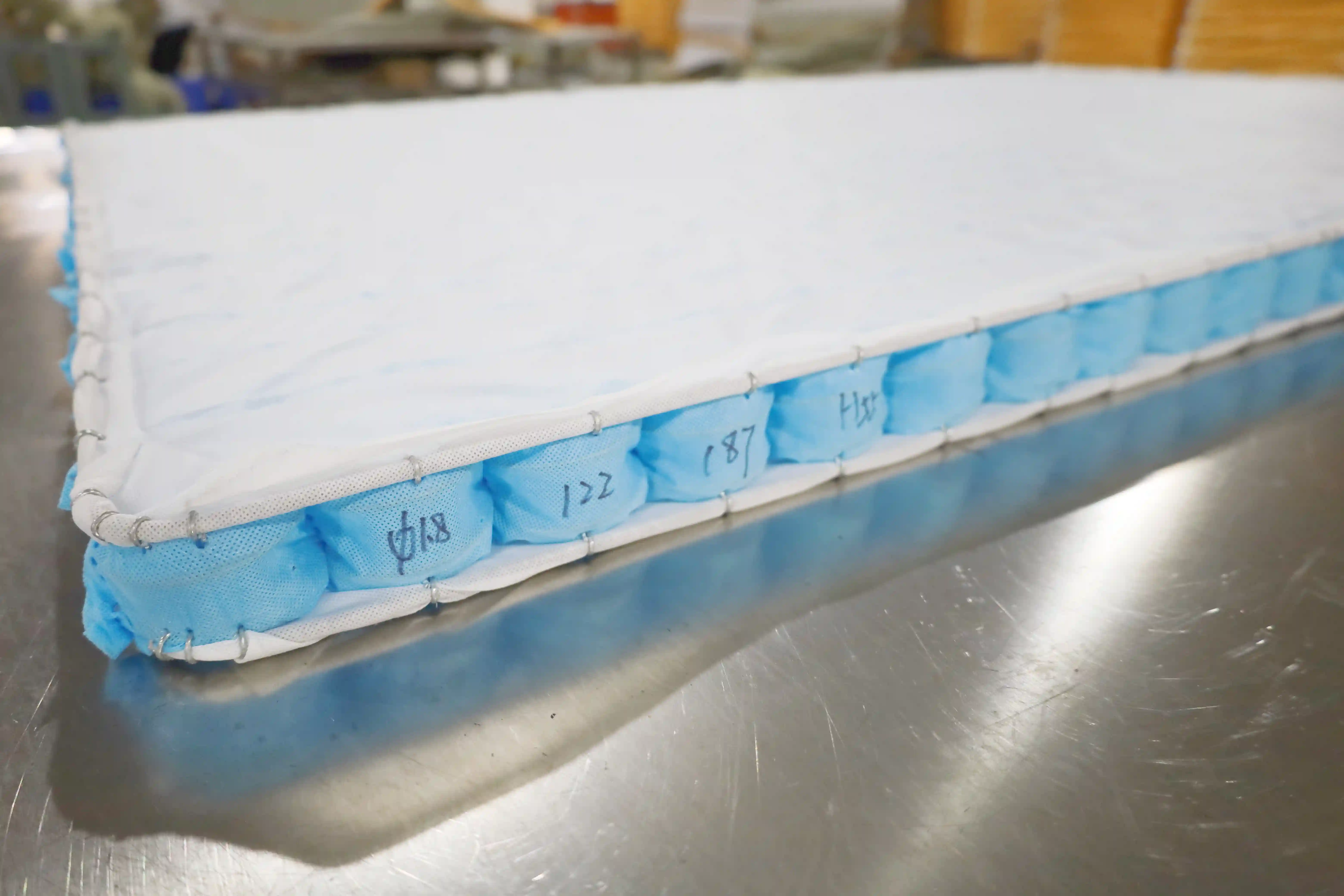
The core output of a standard pocket spring machine is the pocket coil unit for mattresses. Unlike traditional continuous coils or Bonnell spring systems, independent wrapped coil units react to localized pressure, delivering contouring comfort, silent performance, and motion isolation.
Low-End / Value-Tier Mattresses: Typically utilize single-zone pocket spring cores made with 1.8mm to 2.0mm steel wire. The comfort layer uses standard low-density polyurethane foam (15–20 mm) and a basic quilted polyester fabric cover. It offers a entry-level price point for institutional contracts or budget retail.
Mid-Tier / Commercial Comfort Mattresses: Feature 3-zone or 5-zone zoning mattress cores created by alternating wire gauges (e.g., 1.8mm in shoulder/leg zones and 2.0mm in the lumbar zone) using custom made programmed coilers. The comfort layer incorporates 30–50 mm high-resilience (HR) foam, cooling gel-infused memory foam, and high-gsm knitted fabric.
High-End / Luxury & Eco-Friendly Mattresses: Utilize 7-zone ergonomic pocket spring cores, high-density mini/nano coil toppers, or glue-free mechanically stitched pocket spring units. The comfort layers feature natural Dunlop latex, organic wool, or breathable coconut coir. These units command high retail prices and exceptional brand equity.
2. Compressible Sofas, Pocket Spring Sofas, and Upholstered Seating
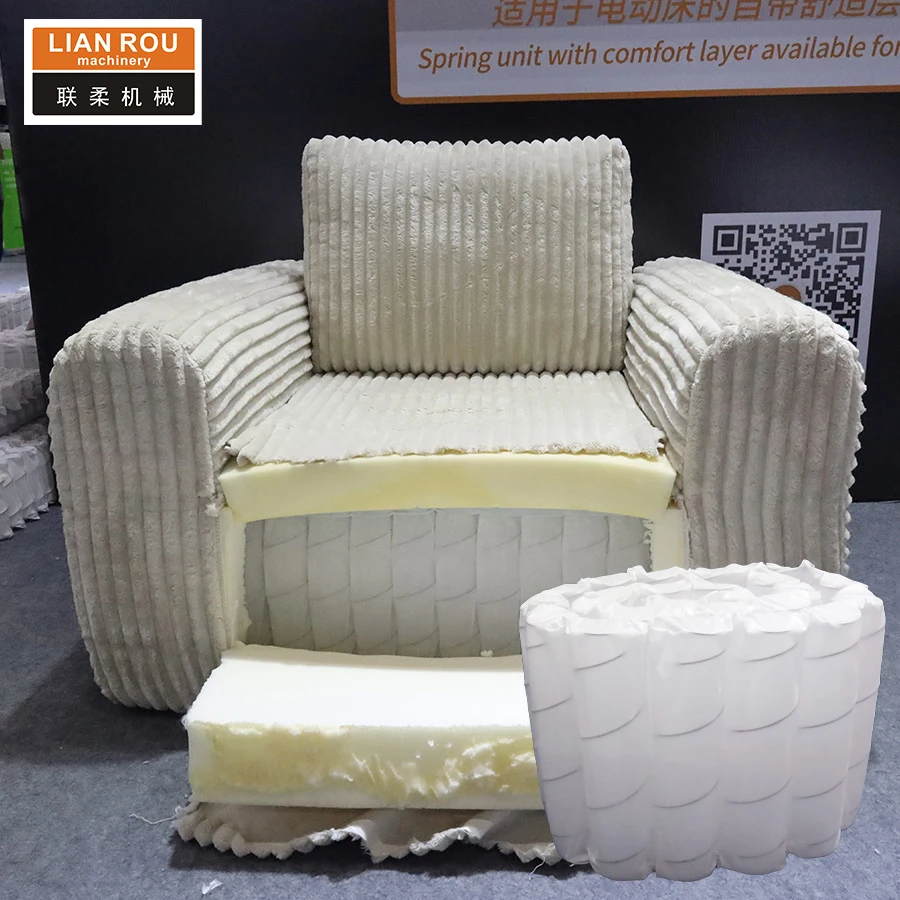
Using a pocket spring machine to produce sofa seating cores represents a massive growth opportunity for furniture manufacturers looking to enter the "Sofa-in-a-Box" export market.
Standard Uncompressed Sofas: Built with a traditional solid wood or metal frame at the base. The backrests and armrests use density-cut foam, while the seat cushions feature pocket spring units (typical cushion unit height: 10–15 cm; wire gauge: 1.8mm–2.2mm; coil count: 4–6 turns). This construction prevents localized sagging and extends cushion lifespan beyond pure foam.
Compressible E-Commerce / Export Sofas: Designed explicitly for cross-border e-commerce platforms. These rely on high pocket spring units exceeding 50 cm in height. A protective foam casing encases the spring unit to form both the base and seat cushion, while armrests and backrests use modular foam blocks. The high resiliency of the pocket coils allows the entire sofa to be vacuum compressed and box-packed, slashing sea freight expenses by over 70%.
Full-Unit Pocket Spring Sofas (Semi-Finished Core Systems): Constructed entirely from bonded pocket spring units without heavy internal timber or steel frames. The backrest height reaches nearly 100 cm, while the integrated base-and-seat combination reaches up to 60 cm in height. By adding a thin layer of micro spring units or HR foam as a comfort topper, manufacturers produce a complete sofa structure at a fraction of the traditional wood and foam material cost.
Cost Comparison (Steel Coil vs. PU Foam per Cubic Meter):
Globally, high-density polyurethane (PU) foam (such as 30–35 kg/m³ HR foam) incurs significant material and chemical raw material costs. In contrast, an equivalent volume of a pocket spring core—comprising lightweight non-woven fabric and cold-drawn spring steel wire—costs 30% to 50% less per cubic meter than solid high-density foam, offering immediate structural cost advantages to furniture factories.
3. Pocket Spring Dining Chairs, Office Chairs, and Automotive Seating
The application of mini pocket spring units is rapidly growing in ergonomic task chairs, luxury dining seats, and vehicle cushions.
By replacing thick foam blocks with compact 5–8 cm pocket coil cores, dining chair and automotive seat manufacturers enhance airflow, reduce heat retention, and provide consistent weight distribution. The steel coils maintain structural tension over millions of compression cycles without hardening or sagging, ensuring long-term durability in heavy-use commercial environments.
4. Ergonomic Pocket Spring Pillows
Human head shapes, neck curvature, and sleeping postures vary widely. Traditional memory foam or down pillows can trap heat or flatten over time. Pocket spring pillows utilize a micro pocket spring core encased in plush comfort materials:
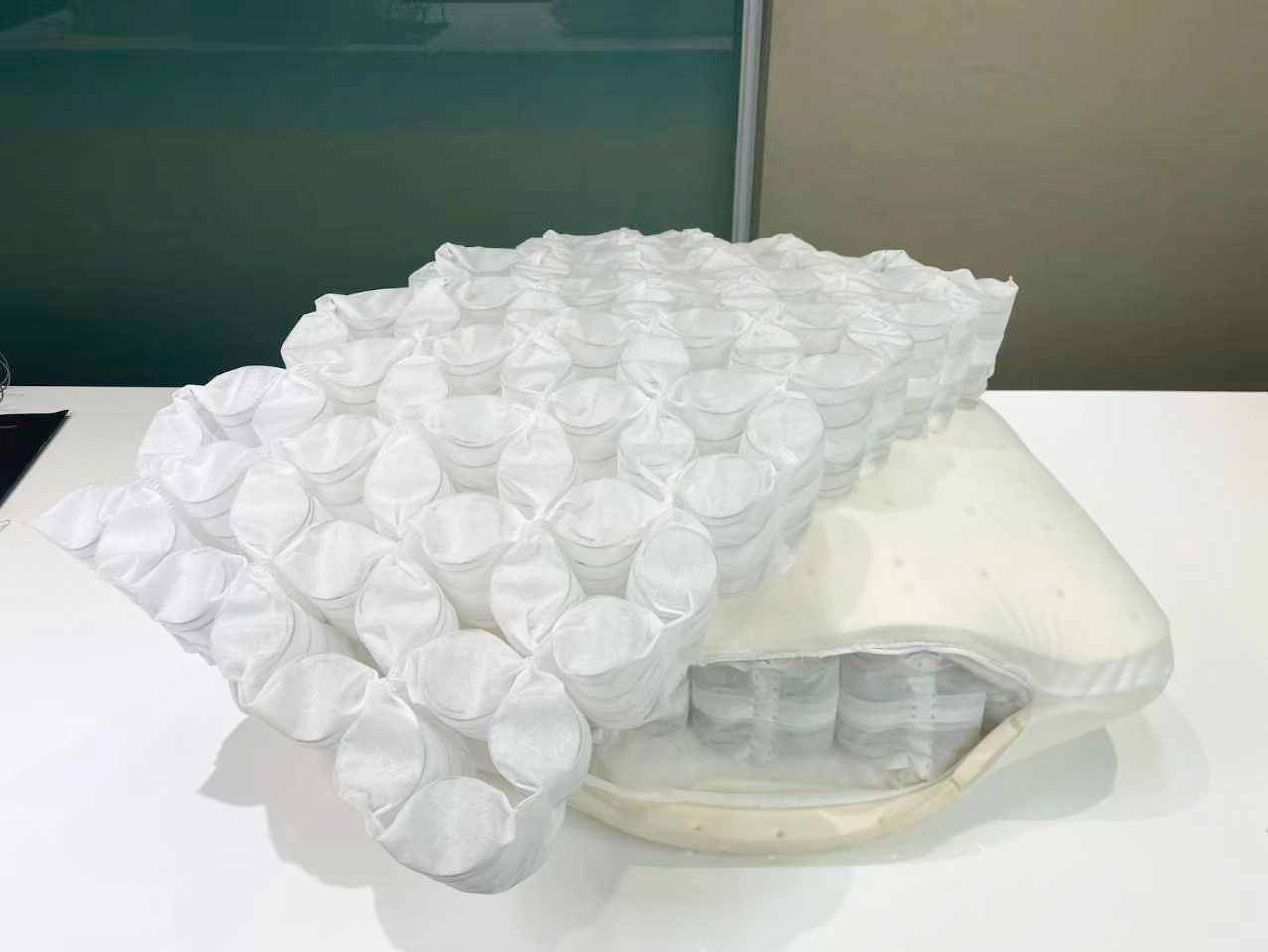
Type A (Foam-Wrapped Pocket Spring Pillow): Features a miniature pocket spring core surrounded by a soft, breathable polyurethane foam shell. The individual coils adjust dynamically to shoulder and cervical spine movements, offering flexible resilience and preventing flattening.
Type B (Latex-Wrapped Pocket Spring Pillow): Combines a micro pocket spring core with a molded natural latex outer casing. This structure provides medium-firm contouring, pressure relief, and active heat dissipation through coil air movement.
Spring Core Dimensions for Pillows: Micro pocket spring units intended for pillow cores typically feature spring heights ranging from 5 cm to 8 cm, utilizing ultra-fine spring wire gauges of 1.0 mm to 1.4 mm for gentle contouring.
5. Thin Mattresses, Toppers, and Tatami Pads
Thin mattresses (5 cm to 12 cm height) and traditional Tatami sleeping pads require thin profiles without sacrificing comfort.
By feeding mini-coils (micro springs or nano coil cores with heights between 3 cm and 7 cm) into a thin mattress profile, manufacturers produce supportive, flexible toppers that can be folded or rolled up easily. These micro-coil toppers provide continuous lumbar support, fit compact urban living spaces, and serve as premium add-ons for existing bedding brands.
How to Manufacture Pocket Spring Furniture Efficiently: Step-by-Step Production Guide
To establish a profitable, high-throughput pocket spring production line, furniture factories must integrate automated coiling, thermal treatment, fabric wrapping, and assembly operations into an optimized manufacturing workflow.
Step 1: Wire Feeding, CNC Coiling, and In-Line Heat Treatment
High-tensile carbon steel wire is fed continuously into a high-speed CNC pocket spring machine. The wire is cold-formed into barrel or cylindrical shapes. Immediately following forming, the spring undergoes an in-line electric heat-treatment (tempering) process. This thermal processing locks the atomic structure of the steel, ensuring high elasticity, resistance to permanent deformation, and consistent height recovery under repeated heavy loads.
Step 2: Ultrasonic Pocket Fabric Encapsulation
Simultaneously, spunbond non-woven polypropylene fabric is folded around the formed steel spring. High-frequency ultrasonic welding horns bond the fabric seams together longitudinally and transversely, encasing each coil inside its own silent cloth pocket without adhesives.
Step 3: Automated Pocket String Cutting and Assembly
The continuous strings of wrapped coils are cut to designated row lengths. The strings are transferred to an automated pocket spring assembly machine.
Here, hot-melt adhesive applicator nozzles apply precise glue lines along the center or top/bottom of each fabric string. High-precision mechanical pusher arms press the strings together to form a full spring core unit. For zoning mattress cores, the assembly line automatically coordinates inputs from dual-wire coiling systems to merge different spring tensions across programmed zones.
Step 4: Foam Encasement and Comfort Layer Lamination
The finished wrapped coil core moves to the upholstery line. High-density foam side-rails are glued along the perimeter to create edge support. Comfort layers—such as memory foam, latex, or transition pads—are layered on the top and bottom faces using eco-friendly hot-melt spray systems.
Step 5: Quatting, Tape-Edging, and Roll-Packing
The composite mattress or compressed sofa core is covered with a quilted outer ticking fabric and finished on a automatic tape-edge machine.
Finally, the product passes into an automated mattress compression and roll-packing machine. The item is vacuum-sealed in heavy-duty polyethylene film, pressed under heavy hydraulic force, folded, and rolled into a compact cylinder ready for boxed shipping.
Selecting the correct machinery configuration depends on your target product mix, daily output requirements, and strategic cost targets. Below is the recommended machinery framework from specialized industrial suppliers such as LianRou Mattress Machinery:
Scenario 1: Standard & High-Yield Mattress and Sofa Manufacturing
For large-scale bedding factories and sofa production lines producing standard or large-format seating units:
Coiling Machinery Selection: Select universal CNC models such as the LR-PS-UVD180, LR-PS-D200, or the expanded-height LR-PS-EVD220. These units deliver versatile wire gauge adjustments (1.6mm–2.4mm) and support spring heights up to 220mm+ for deep cushion seating and plush mattresses.
Assembly Machinery Selection: Pair your coiler with the high-speed fully automatic LR-PSA-99EX Pocket Spring Assembly Machine. Operating at speeds of 27 to 30 rows per minute, it matches the combined output of multiple high-speed coiling machines, maximizing throughput for high-volume factories. For mid-scale factories, the fully automatic LR-PSA-A1 Assembly Machine offers an optimal balance at 18 rows per minute.
For manufacturers focused on reducing raw material expenses and optimizing roll-pack density for international e-commerce export:
Coiling Machinery Selection: Invest in specialized high-compression units such as the LR-PS-UMD or LR-PS-GUMD High Compression Pocket Spring Machine. High-compression coiling pre-stresses the steel wire inside the pocket, yielding superior push-back resilience and load-bearing capacity.
The Steel Cost Advantage: A 1.7 mm wire high-compression coil provides structural support equivalent to a 1.9 mm wire standard pocket coil. Using thinner steel wire cuts total unit weight significantly, yielding substantial savings on steel wire procurement and reducing sea-freight tonnage costs.
Scenario 3: Pillows, Thin Mattresses, Tatami Pads, and Car Seats (Low-Height Units)
For factories specializing in ergonomic pillows, ultra-thin toppers, or small upholstery components:
Coiling Machinery Selection: The standard mattress pocket coil machine cannot reliably produce ultra-short coils. Factories require the LR-PS-OVMS Micro Pocket Spring Machine, capable of producing mini coils and nano coil units at speeds up to 120 springs per minute.
Assembly Machinery Selection: Pair the micro coiler with the LR-PSA-97P Pocket Spring Assembly Machine, featuring dual automatic and semi-automatic operating modes specifically calibrated to manipulate short coil strings without jamming.
Industry Case Study: How a Legacy Foam & Bonnell Factory Transitioned to High-Margin Pocket Springs
To demonstrate the commercial impact of adopting automated pocket coil equipment, consider this documented manufacturing transformation:
Background & Operational Bottlenecks
Company Profile: European Furniture & Bedding Manufacturer (Supplying domestic wholesale and regional B2C retail platforms).
Initial State: The factory produced traditional Bonnell open-coil mattresses and medium-density PU foam sofa cushions.
Key Challenges: Rising polyurethane chemical costs reduced gross margins to 12%. High shipping volumes for non-compressible sofas restricted export territory to a 300-km radius. Heavy price competition from low-cost imports further compressed profitability.
Strategic Implementation & Equipment Deployment
Equipment Procurement: The factory installed a production line featuring two LR-PS-UMD High Compression Pocket Spring Machines alongside an LR-PSA-99EX High-Speed Assembly Machine, plus an LR-PS-OVMS for mini-coil pillow cores.
Product Redesign: Phased out 80% of open-coil models. Replaced pure foam sofa cores with 50 cm high compressible pocket coil seating modules, and launched a flagship 5-zone e-commerce rolled mattress line.
Packaging Upgrade: Integrated high-ratio vacuum roll-packing machinery to enable DTC box packaging across all mattress and sofa lines.
Commercial Outcomes and Financial Results
Gross Margin Expansion: By substituting expensive PU foam blocks with internally produced pocket spring cores and high-compression spring strings, raw material costs dropped significantly, raising average gross margins from 12% to 36%.
Global Logistics Optimization: Boxed compression allowed the factory to load 420 rolled mattresses per 40ft HQ container (up from 120 uncompressed units), slashing unit ocean freight costs by 71%.
Market Expansion: Launched a successful "Sofa-in-a-Box" line across major European e-commerce marketplaces, increasing total company revenue by 165% within 18 months.
Frequently Asked Questions (FAQ) for Industrial B2B Buyers
Q1: Is the learning curve high for operating a modern CNC pocket spring machine?
A1: Modern automated machinery features user-friendly PLC touchscreen interfaces. Operators select spring height, wire diameter, and row coil counts with a tap. Complete installation, operator training, and calibration are typically completed within 3 to 5 days on-site.
Q2: How does a high-compression pocket spring machine save raw steel costs?
A2: High-compression coilers force more turns into a pre-stressed pocket fabric, giving a thinner steel wire (e.g., 1.7 mm) the support characteristics of a thicker wire (e.g., 1.9 mm). This reduces total steel wire consumption per spring unit by 10% to 15% without sacrificing firmness or durability.
Q3: Can a single pocket spring assembly machine handle different coil heights?
A3: Yes. Versatile assembly machines like the LR-PSA-A1 and LR-PSA-99EX feature adjustable guide rails and programmable glue-applicator heights, accommodating standard mattress coils, deep sofa springs, and mini-coil strings with minimal mechanical changeover time.
Q4: Why are pocket spring sofas superior to traditional foam-only sofas for export?
A4: Pure foam sofas are prone to oxidation, hardening, and permanent deformation when subjected to heavy vacuum compression for months during ocean transit. Pocket spring units maintain spring memory, rebounding instantly to 100% of their original height upon unboxing.
Q5: What is the maintenance cycle for ultrasonic welding systems on coilers?
A5: Ultrasonic horns and transducers are designed for heavy industrial use. Regular maintenance involves cleaning fabric dust from the horns daily and inspecting horn face wear every 6 to 12 months.
Q6: Can we produce multi-zone mattresses (e.g., 3-zone, 5-zone) automatically?
A6: Yes. Modern pocket spring coilers can be integrated with dual-wire feeding systems or paired with smart assembly lines that alternate coil strings fed from two separate coilers (running different wire gauges), automatically creating zoned cores without manual intervention.
Q7: What non-woven fabric specification is best for pocket spring encapsulation?
A7: Thermally bonded spunbond polypropylene (PP) non-woven fabric with a surface weight between 60 g/m² and 75 g/m² is recommended for standard mattress and sofa coils to prevent spring poke-through while ensuring strong ultrasonic weld seams.
Q8: How do glue-free pocket spring assembly machines benefit eco-friendly product lines?
A8: Glue-free assembly machines connect pocket strings using mechanical thermal welding or interlocking fabric loops rather than hot-melt adhesives. This makes the finished spring unit 100% recyclable at end-of-life, as the steel wire and PP fabric can be easily separated without chemical contamination.
Q9: Can micro pocket spring machines be used to make toppers and tatami pads?
A9: Yes. Equipment such as the LR-PS-OVMS Micro Pocket Spring Machine specifically produces ultra-short coil units (3 cm to 8 cm height) ideal for thin Tatami sleeping pads, overlay toppers, and ergonomic pillows.
Q10: How do I determine whether my factory needs a 18-row/min or a 30-row/min assembly machine?
A10: Match assembly speed to your total coiling capacity. If your facility operates 1 to 2 standard coiling machines, an 18 row/min unit (such as the LR-PSA-A1) is sufficient. If you operate 3 or more high-speed coilers, deploying a 27–30 row/min unit (such as the LR-PSA-99EX) eliminates assembly bottlenecks and keeps factory floor output at peak efficiency.
اتوماسیون استراتژیک در تولید مبلمان مدرن با فنرهای پاکتی
در بازار جهانی مبلمان و کالای خواب که به سرعت در حال تحول است، تولیدکنندگان تجهیزات اصلی (OEM) از نوع تجاری به تجاری (B2B)، تولیدکنندگان طرحهای اصلی (ODM) و برندهای عرضه مستقیم به مصرفکننده (DTC) با فشار فزایندهای ناشی از نوسان هزینههای مواد اولیه، نرخ بالای حمل و نقل دریایی و رقابت شدید قیمت خردهفروشی مواجه هستند. انتقال عملیات تولید سنتی به فناوری فنر پاکتی خودکار که توسط ماشینآلات تشک LianRou ارائه میشود، مسیری فوری به سوی بهرهوری تولید، تمایز محصول و افزایش حاشیه سود ناخالص ارائه میدهد.
ماشینآلات تشک LianRou به عنوان یک تولیدکننده پیشرو در صنعت ماشینآلات تشک، در فنرهای پاکتی CNC با بازده بالا، ماشینآلات فنر با فشردهسازی بالا، تجهیزات کویل میکرو پاکتی و سیستمهای مونتاژ خودکار فنر با سرعت بالا تخصص دارد. با ادغام خطوط تولید فنر پاکتی اختصاصی LianRou، کارخانههای مبلمان میتوانند تولیدات خود را فراتر از محصولات استاندارد تختخواب، متنوع کنند و به مبلهای رولی فشرده شونده مخصوص تجارت الکترونیک، صندلیهای اداری ارگونومیک، کوسنهای لوکس خودرو، هستههای بالش مینی کویل و پدهای تاتامی بسیار نازک گسترش دهند.
به حداکثر رساندن صرفهجویی در فولاد و حمل و نقل از طریق فناوری فشردهسازی بالای LianRou
یکی از مهمترین اهرمهای مالی در تولید فنر پاکتی پیچیده شده، بهینهسازی سیم فولادی است. واحدهای فنر پاکتی سنتی برای دستیابی به استحکام به سیم ضخیمتر متکی هستند که باعث افزایش وزن کل تشک و هزینههای مواد اولیه میشود. دستگاههای فنر پاکتی پیشرفته با فشردهسازی بالای LianRou (مانند سریهای LR-PS-UMD و LR-PS-GUMD) این چالش را از طریق فناوری تخصصی پیشتنیدگی حل میکنند.
با پیشفشردهسازی سیم فولادی کربنی با کشش بالا درون محفظه پارچه نبافته، یک فنر سیمی ۱.۷ میلیمتری که با دستگاه فشردهسازی بالای LianRou تولید میشود، به پشتیبانی ساختاری و مقاومت تحمل بار معادل یک کویل پاکتی استاندارد سیمی ۱.۹ میلیمتری دست مییابد. برای کارخانههای با حجم تولید بالا، این کاهش در ضخامت سیم مستقیماً به کاهش ۱۰ تا ۱۵ درصدی هزینههای مواد اولیه فولادی به ازای هر واحد تشک منجر میشود. علاوه بر این، هستههای کویل سبک وزن پیچیده شده به طور قابل توجهی تناژ کلی کانتینر را کاهش میدهند و هزینههای حمل و نقل دریایی را برای صادرات فرامرزی کاهش میدهند.
حل گلوگاه صادرات با مبلهای فنر پاکتی فشردهپذیر
بالشتکهای فومی پلی اورتان (PU) سنتی و قابهای سفت و سخت مبل از جنس سیم Bonnell به دلیل حجم زیاد و حساسیت به تغییر شکل دائمی هنگام فشردهسازی در خلاء برای دورههای حمل و نقل طولانی، موانع لجستیکی شدیدی را برای تولیدکنندگان صادراتی ایجاد میکنند. ماشینآلات تخصصی کویلینگ با بالشتک عمیق LianRou به تولیدکنندگان مبلمان این امکان را میدهد که فوم PU پرهزینه را با واحدهای کویل پاکتی انعطافپذیر و فشردهپذیر جایگزین کنند.
هستههای فنریِ مبلِ LianRou پس از فشردهسازی هیدرولیکی سنگین، بیش از ۸۰٪ عملکرد بازیابی ارتفاع دارند. هنگامی که در قالبهای جعبهایِ «مبل در جعبه» بستهبندی میشوند، ظرفیت کانتینر حمل بار تا ۳۰۰٪ افزایش مییابد و به توزیعکنندگان اروپایی، آمریکای شمالی و آسیای جنوب شرقی اجازه میدهد تا سربارِ تحویل را به طور چشمگیری کاهش دهند. علاوه بر این، از آنجا که هستههای فنریِ ... خطوط مونتاژ LianRou که مجهز به صفحات لمسی PLC، دستگاههای هوشمند چسب حرارتی و هماهنگی خودکار ناحیه سیم هستند، به اپراتورها اجازه میدهند تا به طور یکپارچه بین پیکربندیهای تشک تک ناحیهای، ۳ ناحیهای، ۵ ناحیهای و ۷ ناحیهای جابجا شوند. برای کاربردهای تخصصی مانند روکشهای میکرو کویل، تخت حیوانات خانگی یا بالشتکهای تکیهگاه سر، دستگاه مونتاژ دو حالته LR-PSA-97P، جابجایی دقیق رشتههای کوتاه کویل تا ارتفاع ۳ سانتیمتر را تضمین میکند.
با همکاری با ماشینآلات تشک LianRou، تولیدکنندگان مبلمان به راهحلهای تجهیزات آماده به کار و قابل تنظیم با پشتیبانی فنی مداوم، نصب سریع و دوام صنعتی اثباتشده دسترسی پیدا میکنند - که به برندها قدرت تسلط بر بازار جهانی خواب و روکش را میدهد.