지능형 매트리스 기계
150개국 이상 수출
Date:
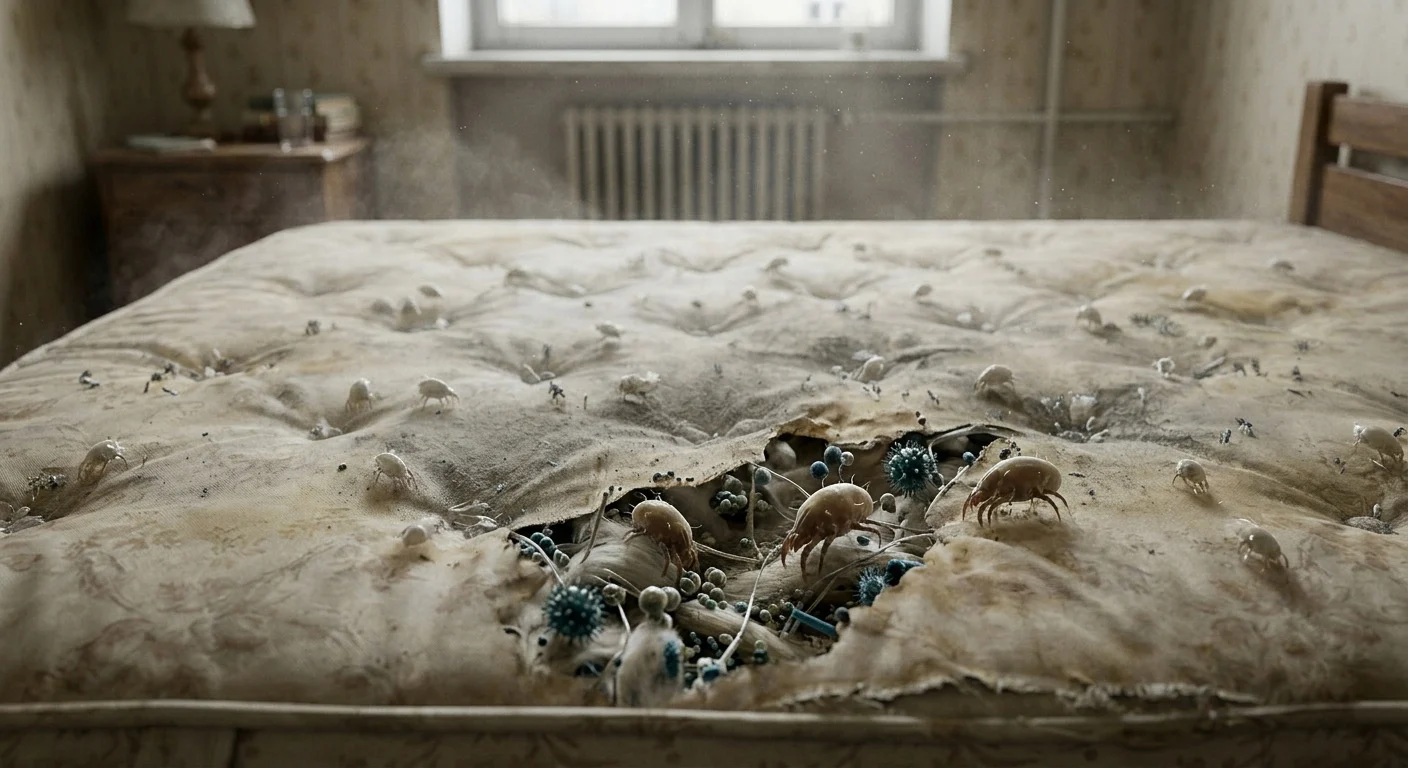
Humans spend roughly one-third of their lives on a mattress. According to research published in the *Journal of Allergy & Clinical Immunology*, a single mattress can host anywhere from 100,000 to 10 million dust mites, along with significant populations of bacteria, fungi, and shed skin cells. Despite this, mattress sanitation remains widely neglected by both consumers and manufacturers. This guide provides a comprehensive overview of mattress cleaning methods — from at-home maintenance to factory-level sterilization prior to shipment — and introduces professional-grade equipment, including fully automatic mattress cleaning machines and six-sided sterilization systems. Understanding these solutions enables consumers to make more informed, hygiene-conscious decisions, while helping manufacturers recognize why automated mattress cleaning represents a distinct competitive advantage.
Global allergy research identifies dust mites as the most prevalent indoor allergen, affecting an estimated 1 to 2 billion people worldwide and triggering conditions from rhinitis and eczema to asthma.
In a standard double mattress used for two years, personal exposure can reach up to 2 million dust mites feeding on shed skin cells. These mites, along with their waste and associated bacteria, thrive in the warm, humid microenvironment inside the mattress—a problem that routine sheet washing cannot address.
For mattress manufacturers, delivering a hygienic product directly influences brand reputation. In key markets such as the United States, Western Europe, and Japan, a growing number of premium brands are investing in mattress cleaning systems or UV disinfection equipment to sanitize each mattress before packaging and shipping. This practice not only demonstrates a strong commitment to product quality but also reduces after-sales complaints, building a reputation for healthy sleep products and responsible manufacturing.
Handheld UV mattress sterilizer sticks sold by brands such as Sharper Image, Airthereal, and JIGOO are compact UV sterilization devices for mattresses. They use ultraviolet light to irradiate the mattress surface while simultaneously removing debris via a small vibration device or vacuum motor. These sterilizer sticks are inexpensive (typically $50-$200), widely available, and do effectively reduce bacteria on the mattress surface. Disadvantages include:
* UV light cannot penetrate mattress fabric and foam, leaving no way to remove dust mites and bacteria 2-4 cm below the mattress surface.
Even with monthly routine maintenance, the sterilization effect is negligible. This is completely inadequate for mattress manufacturers who require intensive sterilization of the entire mattress.
Steam cleaners use high-temperature (120-150°C) steam to kill dust mites, bacteria, and fungi. Professional steam cleaning is indeed effective; it can penetrate several centimeters deep into mattress fabric and does not require the use of chemicals. Studies have shown that professional thermal extraction can reduce the concentration of dust mite allergens in mattresses by up to 95%. The disadvantages are as follows:
• Steam cleaning leaves mattress materials damp, requiring 4-8 hours to dry.
• In high humidity environments, an incompletely dried mattress can become a breeding ground for mold, leading to another hygiene problem.
Therefore, steam cleaning is only suitable for periodic professional treatments and not for bulk sterilization in mattress factories.
Mid-range portable mattress cleaning systems, such as the German MattPro® UV system or high-end vacuum cleaner brands with UV functionality, combine HEPA vacuum suction with UV ultraviolet irradiation. MattPro® claims to perform a 12cm deep deep clean through vibration and suction, while removing killed mites and debris. These devices represent a significant improvement in sterilization compared to handheld vacuum cleaners. Their UV output power (59-84 watts) is commercially viable, and their HEPA filtration systems effectively remove particulate matter. However, these products also have drawbacks:
· Designed for service industries (hotels, nursing homes), not mattress production lines;
· Can only clean one side of the mattress at a time;
· Low throughput (approximately one mattress every 15-20 minutes), making them unsuitable for integration into mattress factories' sterilization lines.
UV tunnel systems place mattresses on a conveyor belt and pass them through a sterilization chamber with built-in UV lamps. These systems address the throughput limitations of handheld devices, processing multiple mattresses per hour. Disadvantages include:
· Most commercial UV tunnel systems only irradiate the top and bottom surfaces of the mattress, meaning the four sides receive no UV exposure. This poses a material hygiene risk for thick mattresses with large lateral areas.
· Most tunnel sterilization systems require manual adjustment of the mattress position to ensure all sides are exposed, making them not fully automated and posing operational risks to workers.
Currently, the most suitable sterilization equipment for mattress factories is the fully automatic six-sided UV sterilization system. It combines full six-sided coverage with automatic rotation, eliminating the need for manual adjustment and completing the sterilization process entirely automatically. This mattress sterilization equipment is specifically designed for integration into high-efficiency mattress production lines, enabling automated processing before mattress packaging.

The following comparison covers representative mattress UV sanitizer and mattress washing machine products across consumer and semi-professional categories.
A standard mattress has six sides: front, back, head, foot, left, and right. The total area of the four edges of a standard double mattress (152 × 203 cm, 25 cm thick) is approximately 1.78 square meters, accounting for more than 30% of the mattress's total surface area. UV disinfection channels and steam sterilization systems that only cover the front and back leave the other surfaces completely untreated. Comprehensive automated UV disinfection of mattresses must cover all six sides and must be automated.
▸ Automatic Mattress Rotation Mechanism: Automatically rotates and repositions the mattress, ensuring all six sides receive UV ultraviolet radiation without manual intervention, thus eliminating ergonomic risks and manufacturing errors.
▸ UV Disinfection Matrix: Employs industrial-grade UV lamps to ensure uniform irradiation intensity and time on each side, achieving deep sterilization.
▸ Conveyor Structure: Seamlessly connects the mattress edge-sealing and rolling/compression processes in the mattress production line.
▸ PLC + Servo Control: Utilizes PLC touchscreen control for speed control, alarm management, and process recording.
▸ No Chemical Residue: UV ultraviolet disinfection produces no chemical residue, requires no drying time, and is safe for subsequent compression and packaging.
▸ Six-Sided Mattress Disinfection Function: Fully covers all four sides of the mattress, including the head, foot, and sides.
▸ Provides verifiable disinfection results.
▸ The compression process pushes potential internal contaminants outward, mitigating the risk of side contamination in roll-packaged mattresses.
▸ Enables manufacturers to highlight "UV-disinfected certified mattresses," increasing brand and mattress value and positioning them as high-end products.
▸ Seamlessly integrates into production lines without impacting existing capacity.
Sleep Foundation and multiple consumer surveys consistently rank mattress hygiene among the top three factors in purchasing decisions, particularly among young parents, allergy sufferers, and high-end market buyers. Mattress brands that explicitly advertise factory-level UV disinfection, clean production, or third-party hygiene certifications gain a significant price premium and customer recognition advantage.
In Japan, where hygiene standards are extremely stringent, major mattress brands include disinfection documentation in their packaging. In the United States, brands like Casper and Saatva have begun emphasizing clean production concepts and widely promoting them among their customer base. In the hotel and hospitality industry, mattress brands supplying four- and five-star hotels are typically required to provide pre-shipment disinfection protocols as a necessary condition for procurement consideration.
A mattress manufacturer received a procurement contract from a large US hotel chain. The contract required that all mattresses have written UV disinfection records and an explanation of the equipment's disinfection principles before packaging. The mattress manufacturer offered a manual disinfection solution using portable UV sterilization wands, but this was rejected because the disinfection was incomplete and the irradiation dose for each mattress could not be verified. Later, the manufacturer introduced a fully automated, six-sided rotating UV disinfection device into its production line, successfully obtaining compliance certification. The product passed authoritative testing in the hotel's procurement channels, successfully positioning itself as a UV-disinfected certified mattress brand.
A mid-range European mattress brand continued to receive returns from consumers because consumers developed dust mite allergies within six months of using the product. The local price bureau investigated the case and pointed out that no cleaning certificate was provided when the mattresses were shipped. Considering potential after-sales issues, the brand installed a mattress disinfection device that automatically performs UV treatment on all six sides before vacuum compression and roll packaging. Disinfection certification labels were also added to the mattress packaging. Consumer reviews and retailer feedback have shown significant improvement, and there have been no more allergy-related returns.
For consumers without access to industrial mattress cleaning automation, a multi-step protocol provides the most effective results:
Machine wash sheets, pillowcases, and mattress protectors in water at 60°C or higher to kill dust mites. Do not use bleach to clean waterproof mattress protectors, as high temperatures or corrosive chemicals will damage the waterproof coating. After machine washing, air dry in direct sunlight or use a dryer.
Apply a small amount of enzyme-based cleaner or dish soap (for removing protein stains such as blood or urine) to the stain and blot with minimal moisture. Wipe from the outer edge of the stain inwards and allow to air dry.
Slowly pass a consumer-grade UV mattress sterilizer over all surfaces of the mattress for surface sterilization. While it cannot penetrate deep into the mattress to kill dust mites, it effectively reduces pathogens on the surface.
Sprinkle a layer of baking soda evenly on the mattress surface. Let it sit for at least 2 hours to absorb odors. Remove the baking soda from the surface by vacuuming. Then flip the mattress over and repeat the process.
Before remaking the bed, ensure the mattress is completely dry and replace it with clean bedding.
The mattresses, after edge stitching, are conveyed to the feeding conveyor platform of the automatic flipping UV sterilization machine.
The mattresses enter the UV sterilization area, where industrial-grade UV lamps irradiate and sterilize them.
A fully automatic mattress rotating mechanism ensures that every surface of the mattress is effectively treated.
The fully sterilized mattresses enter the discharge conveyor platform and are sent to the packaging production line.
The primary application of LianRou's automatic mattress UV disinfection system is integration into mattress factory production lines. This mattress cleaning automation step is positioned between the final assembly/sewing stage and the packaging stage. Every mattress that leaves the factory has been automatically disinfected on all six faces — providing manufacturer-level hygiene certification before the product reaches the consumer. This is particularly valuable for export markets with strict hygiene compliance requirements.
Hotels replace mattress stock on 5–8 year cycles. During in-house refurbishment — where mattresses are retained and professionally cleaned rather than replaced — a portable or semi-fixed mattress disinfection equipment system provides thorough UV sanitization. LianRou's industrial solutions can be adapted for logistics-center deployment serving hotel chains across multiple properties.
Hospitals, rehabilitation centers, and nursing homes require the most stringent levels of mattress disinfection. The mattress UV sanitizer category — particularly 6-side automated systems — provides documented, repeatable sterilization records per unit, supporting infection control audit requirements. Chemical-free UV treatment also eliminates allergy and respiratory risks associated with conventional chemical disinfectants.
For bed-in-a-box and direct-to-consumer mattress brands, the compression and roll-packing process creates particular contamination risk — as compression forces air and debris from the interior layers outward. A UV disinfection step immediately before vacuum compression is the most defensible hygiene protocol for this product format. LianRou's mattress flipping disinfection machine is designed to fit precisely into this production flow.
UV light at adequate dosage kills dust mites and bacteria on surfaces it directly reaches. The limitation in consumer handheld devices is insufficient power and exposure time to penetrate foam layers. Industrial UV arrays with engineered irradiance levels achieve effective surface sterilization — which, combined with mechanical compression during roll-packing, addresses the overall mattress microbiological burden. For comprehensive mite control, UV treatment is most effective as part of a multi-step protocol including HEPA vacuuming and hot washing of bedding.
A mattress washing machine (in the literal sense) uses water, detergent, and mechanical action — suitable for industrial textile cleaning but impractical for assembled spring mattresses that cannot be safely saturated. UV disinfection machines use non-ionizing radiation to break down bacterial DNA and denature allergens — a dry, chemical-free process that is completely compatible with packaged spring, foam, and latex mattresses. For industrial mattress manufacturers, UV disinfection equipment is the standard approach.
LianRou's mattress flipping mechanism is engineered with adjustable parameters for mattress height, weight, and stiffness. The flipping motion uses controlled servo actuation — not gravity drop — ensuring gentle handling equivalent to or better than manual repositioning. The system has been validated across the full range of mattress types produced in LianRou partner factories, from soft foam toppers to firm high-compression pocket spring mattresses.
Processing time is calibrated to the upstream production line speed. For a standard queen mattress, the full 6-side cycle in LianRou's system is designed to run within the existing takt time of a modern mattress production line — typically 2–5 minutes per unit — without creating a bottleneck. Exact throughput specifications are available from LianRou on request.
Yes. UV disinfection is a purely physical process — electromagnetic radiation. It produces no chemical residues, no heat, no moisture, and no off-gassing. A mattress exiting the LianRou 6-side sterilizer is immediately safe for packaging, shipping, and use. This is a key advantage over steam cleaning (requires drying) and chemical disinfectants (requires ventilation and residue testing).
LianRou's mattress cleaning automation system is designed as a pass-through station compatible with standard conveyor-based production lines. It interfaces with LianRou's SMARTLINE system for production data integration and can also be connected to third-party upstream and downstream equipment. LianRou's engineering team provides on-site layout consultation, installation, and operator training globally.
LianRou's credibility in the mattress disinfection equipment category rests on the same foundation that has made it the world's leading pocket spring machine manufacturer:
▸ Founded 1978, China's first pocket spring machine manufacturer since 1998 — over 45 years of mattress machinery engineering.
▸ ISO9001 Quality Management System | ISO14001 Environmental Management System | ISO45001 Occupational Health and Safety — triple ISO certification for all product lines.
▸ CE certification on all export products — full EU machinery directive compliance.
▸ 200+ international authorized patents (USA, Germany, Poland, Turkey and others).
▸ National-Level Little Giant Enterprise designation by the Chinese government.
▸ Intellectual Property Demonstration Enterprise.
▸ SMARTLINE intelligent production system — Industry 4.0 integration capability.
▸ R&D team of 65 full-time engineers including PhDs and Masters-level specialists.
▸ 2,000+ global factory partners across 150+ countries and regions.
These credentials establish LianRou not merely as a machine supplier, but as a verified engineering partner — a distinction that matters when investing in critical process equipment such as mattress disinfection automation.


TOP
