เครื่องจักรที่นอนอัจฉริยะ
ส่งออกไปกว่า 150 ประเทศ
Date:
Behind the bustling global mattress market, a silent tide is rising. From apartment stairwells in Boston to suburban streets in Sydney, from narrow alleys in Tokyo to old districts in Paris, abandoned mattresses are becoming a shared headache for city managers and consumers alike. Bulky, difficult to move, and complex in their material composition, they are hard to dismantle. Often, after paying a hefty removal fee, they end up in landfills, becoming an environmental burden for decades.
.webp)
This is a worldwide environmental issue. As living standards and awareness of sleep health improve, mattress replacement cycles have shortened from over ten years to between five and eight years. Consumption is upgrading, but old mattress disposal is now harder and more expensive than buying a new one, with costs sometimes reaching hundreds of dollars, causing real frustration for consumers.
Many internationally renowned brands have caught this trend, attempting to turn recycling services into a brand moat. IKEA runs paid old mattress take-back programs in multiple countries, extending its vast logistics network to the product's end-of-life. Emerging brands like Casper and Emma commonly offer "eco-friendly old mattress disposal" as a checkout option, partnering with professional recycling companies. Traditional giants like Simmons and Sealy also provide similar services through their channels. However, behind offering old mattress recycling as a value-added service lie massive logistical support and processing costs. These fees are either quietly baked into product premiums or become a sustained operational expense. For the vast majority of small and medium-sized mattress manufacturers without such extensive channels or bargaining power, building their own mattress recycling system is nearly an impossible task.
A resident in Massachusetts, USA, discovered it cost $70 to legally dispose of one old mattress in their city. In major global cities like New York, London, and Sydney, fees for removing a mattress via municipal systems or private companies typically range from $30 to $150. This isn't just a monetary cost but a huge drain on energy—researching complex municipal recycling schedules, booking weeks in advance, and hauling the heavy mattress to the curb early on a specified day. For young renters without cars or elderly individuals with limited mobility, this is an almost insurmountable task. Chinese consumers also report that disposing of an old mattress involves moving fees, transport costs, space for dismantling, disassembly fees, removal fees, and landfill charges, with additional costs based on size, weight, difficulty of movement, and floor level. The recyclable value, limited mostly to springs and other metals, is far lower than the total removal cost, and scrap dealers are often unwilling to provide pickup service. This high cost and inconvenience lead to widespread illegal dumping, turning a private nuisance into a public environmental disaster. It also subtly discourages consumers from buying new: the thought of future disposal troubles makes some prefer to endure an old, uncomfortable mattress.
.webp)
To curb illegal dumping, places like California, USA, have enacted the Mattress Recycling Act, explicitly extending producer responsibility to manufacturers, requiring them to fund and establish systems for end-of-life recycling. Connecticut and Rhode Island have followed. Across the Atlantic in the EU, Extended Producer Responsibility (EPR) is a cornerstone of environmental regulation. In France, for instance, mattress manufacturers must pay to join an official recycling scheme. In some Australian states, landfilling intact mattresses is banned by law.
These regulations send a clear signal: handling old mattresses is shifting from an optional "corporate social responsibility" to a mandatory "statutory cost" for businesses. The price for illegal disposal is equally high, from on-the-spot fines of hundreds of dollars in Massachusetts to penalties of thousands of Australian dollars for companies in New South Wales. Illegally dumping a mattress has become a costly gamble.
Consumer replacement cycles are shortening, while the backlog of waste grows. Leading brands use recycling services as a barrier, and the regulatory sword of Damocles is lowering. This is precisely why LianRou Technology developed the Detachable Pocket Spring System. LianRou's solution isn't about adding another expensive pipeline at the clogged end but gently untying the knot at the product's source.
In the testing workshop of Guangdong LianRou Intelligent Technology Co., Ltd., an engineer demonstrates a simple action: using ordinary office scissors to snip the thread along the edge of a 1.8x2 m detachable pocket spring unit, then pulling the sewing thread—the tightly stitched fabric pockets open like a zipper, and intact springs pop out one after another. The spring separation task that recyclers dread is completed in under five minutes.
This is LianRou's new mattress core designed for at-home recycling—the Detachable Pocket Spring System. By combining traditional ultrasonic welding with sewing thread stitching for the pockets, it ensures the encapsulation is secure and the structure robust while endowing the spring unit with an at-home disassembly feature. This allows the mattress's core, the hardest-to-separate part—the pocket spring system—to be disassembled by the consumer at home in minutes. Once consumers separate the core at home, handling the fabric layers and comfort layers (foam, latex, etc.) becomes much easier, saving on removal and transport fees. It reduces the most time- and energy-intensive cost in the recycling supply chain—disassembly and sorting—to virtually zero through design.
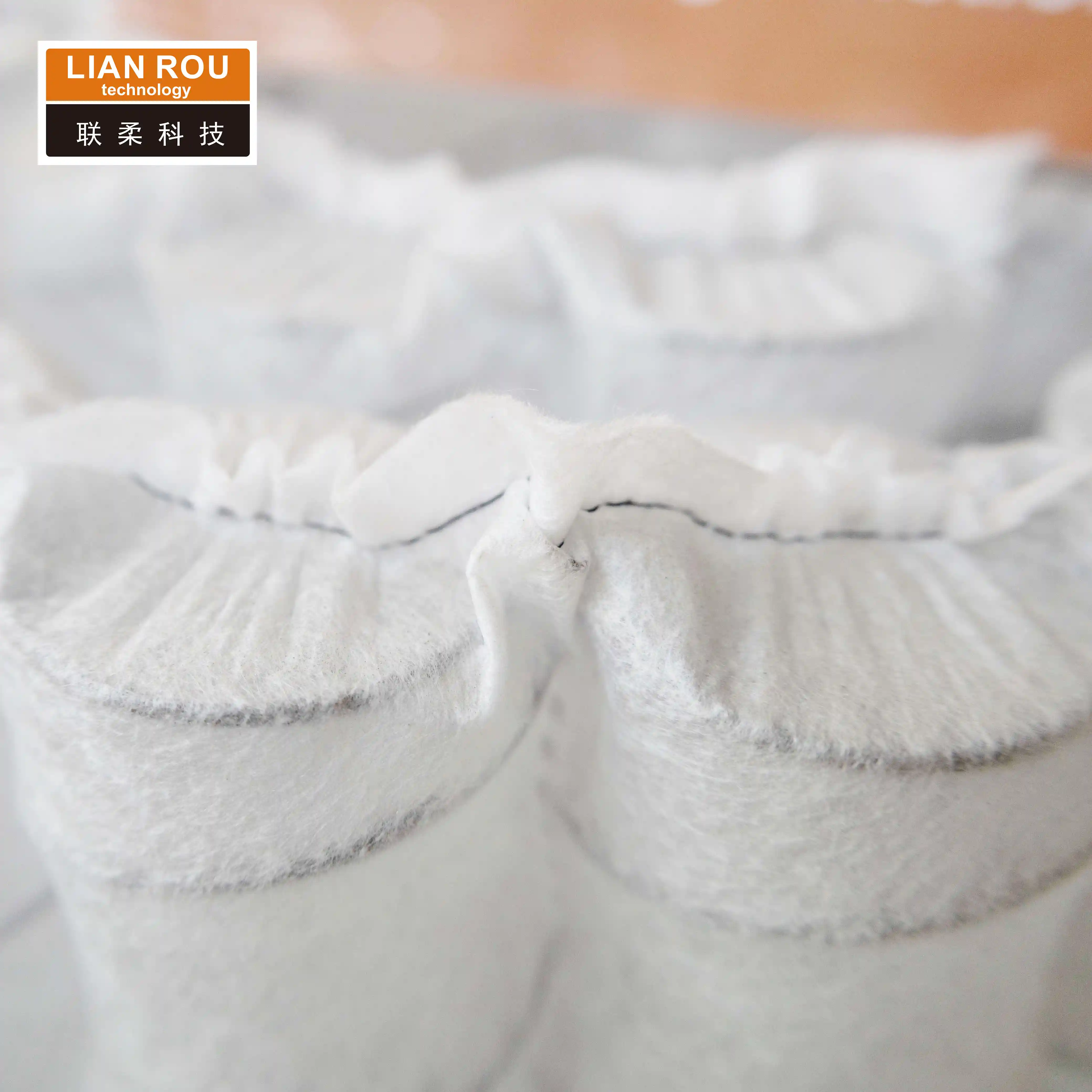
When industry leaders use "free old mattress pick-up" as a service promise, many small and medium brands using LianRou's Detachable Pocketed Spring System in their premium lines are carving a differentiated path. Brands don't need to shoulder heavy recycling costs; they simply tell consumers: The core of our mattress can be easily taken apart at home. The separated springs are high-quality steel, and the fabric, foam, and other layers are easy to handle.
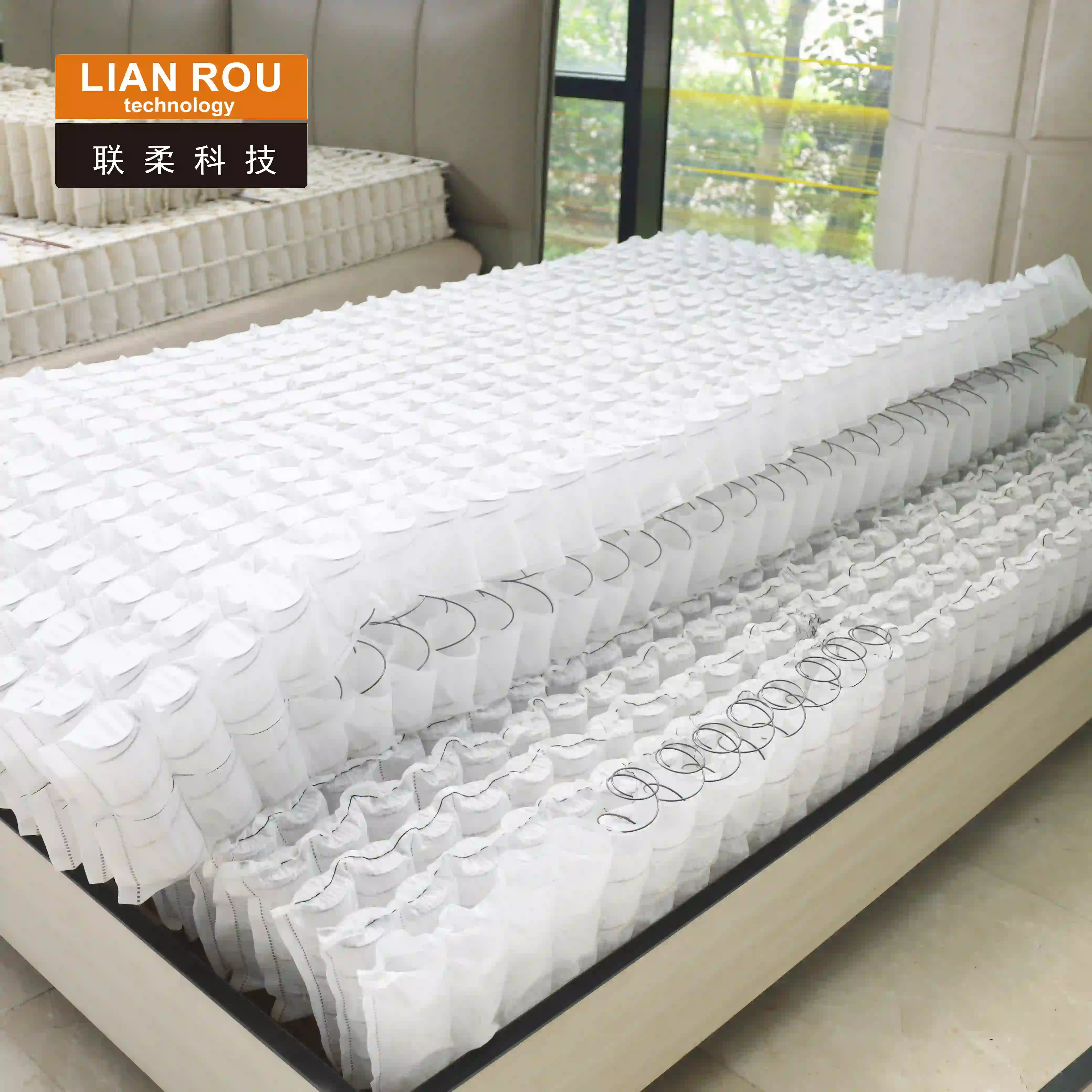
This move transforms the recycling headache into a powerful differentiation advantage at the point of sale. The "sense of environmental participation, the novelty of disassembly, and the convenience of disposal" perfectly counter competitors' recycling services. It's the most agile and economical strategy to meet increasingly stringent global eco-regulations, and it enhances the brand's public image through deeper emotional resonance.
Beside the workshop test bench, piles of clean, separated springs and neatly stacked non-woven fabric await different recycling streams, not the landfill. The Pocket Spring System with Dismantling Function makes separation simple, drastically reducing recycling costs and compliance risks. It also lowers the barrier to implementing sustainability. Regardless of scale, any mattress factory can use this system to add genuine green value.
The single sewing thread in the Detachable Pocket Spring System unties not just the fabric pocket but also the knot constricting the industry's green transition. LianRou Technology is providing mattress manufacturers with a visible, tangible, and compelling new "green pivot point."


TOP
